Just passing through
Tallinn
A compact medieval city you understand quickly — and keep discovering anyway.
Tallinn is compact — compact enough to feel immediately familiar. It’s a city of layers, and they’re easy to read on foot. A place that rewards the walker who leaves the main streets behind.
The lay of the land
How the city is built
The old city, Vanalinn, spreads out at the foot of Toompea, with the upper town rising above it. Around it, the newer parts of the city reach toward the sea. Walking here is largely about understanding that relationship between high and low — upper town and lower town, medieval walls and the modern streets just outside them.
A few neighbourhoods
How the city changes
A few areas give a sense of how the city shifts as you move through it.
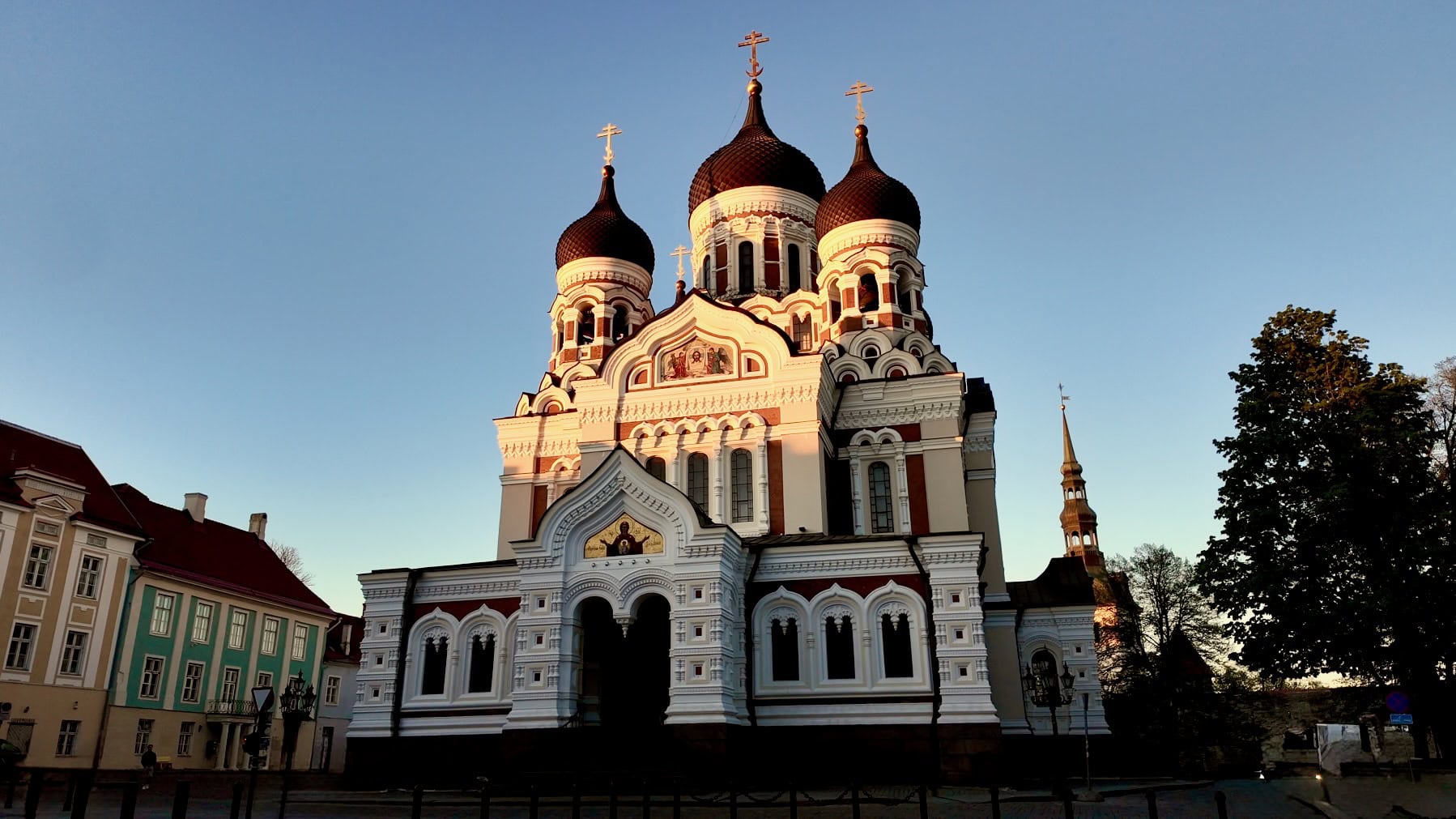
Toompea — the upper town. Quiet, institutional. Government buildings, a castle, a cathedral, and views over the city that tell you exactly where you are.
Vanalinn — the old town below. Medieval streets, steep in places, with a density that changes how you move. This is where the city draws most of its visitors — and where it’s also easiest to lose yourself in it.
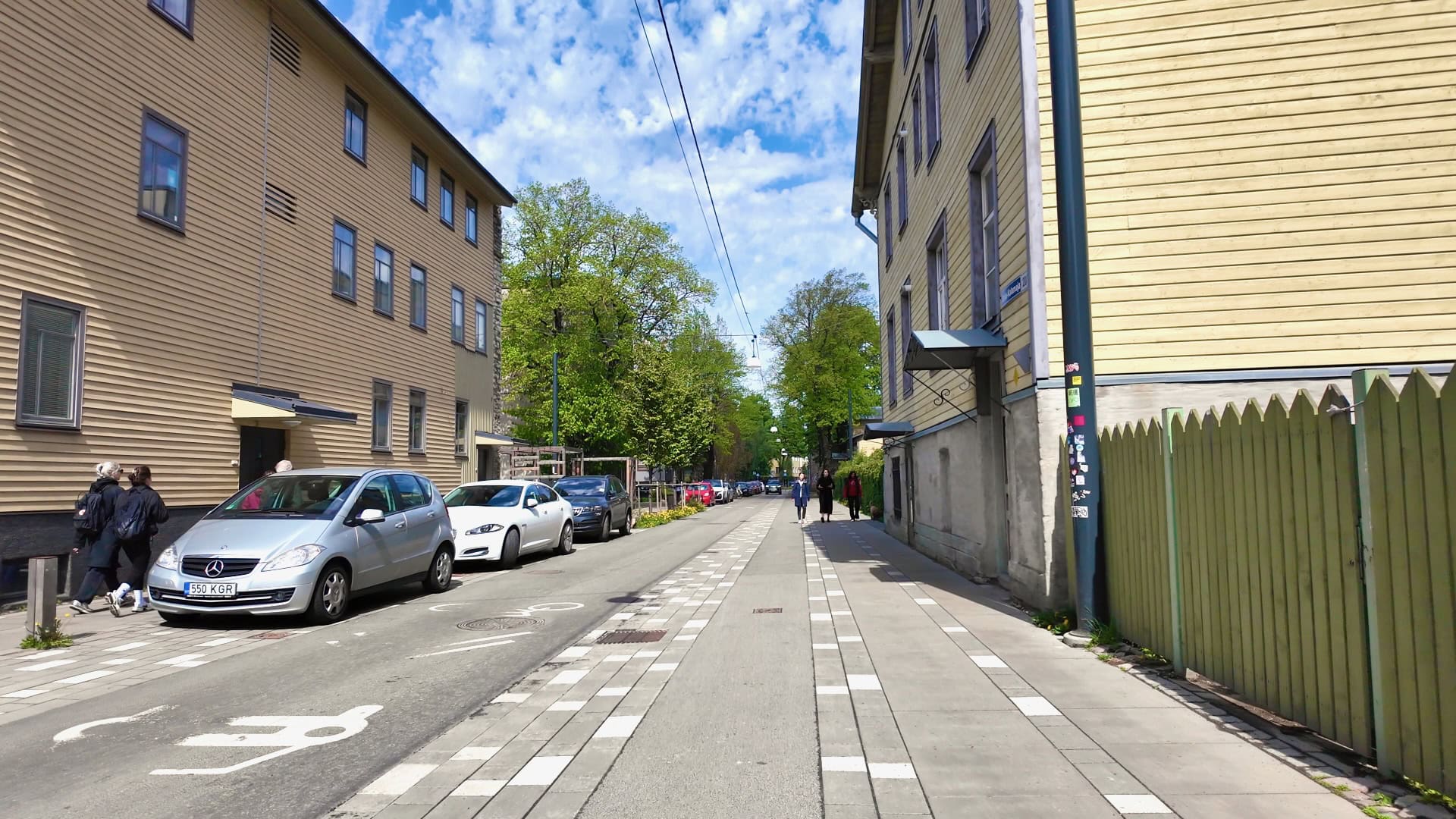
Kalamaja — the old working-class neighbourhood to the northwest. Wooden houses, a different colour palette, a different tempo entirely.
How it feels to walk
Walking Tallinn: Old Town, Toompea and Beyond
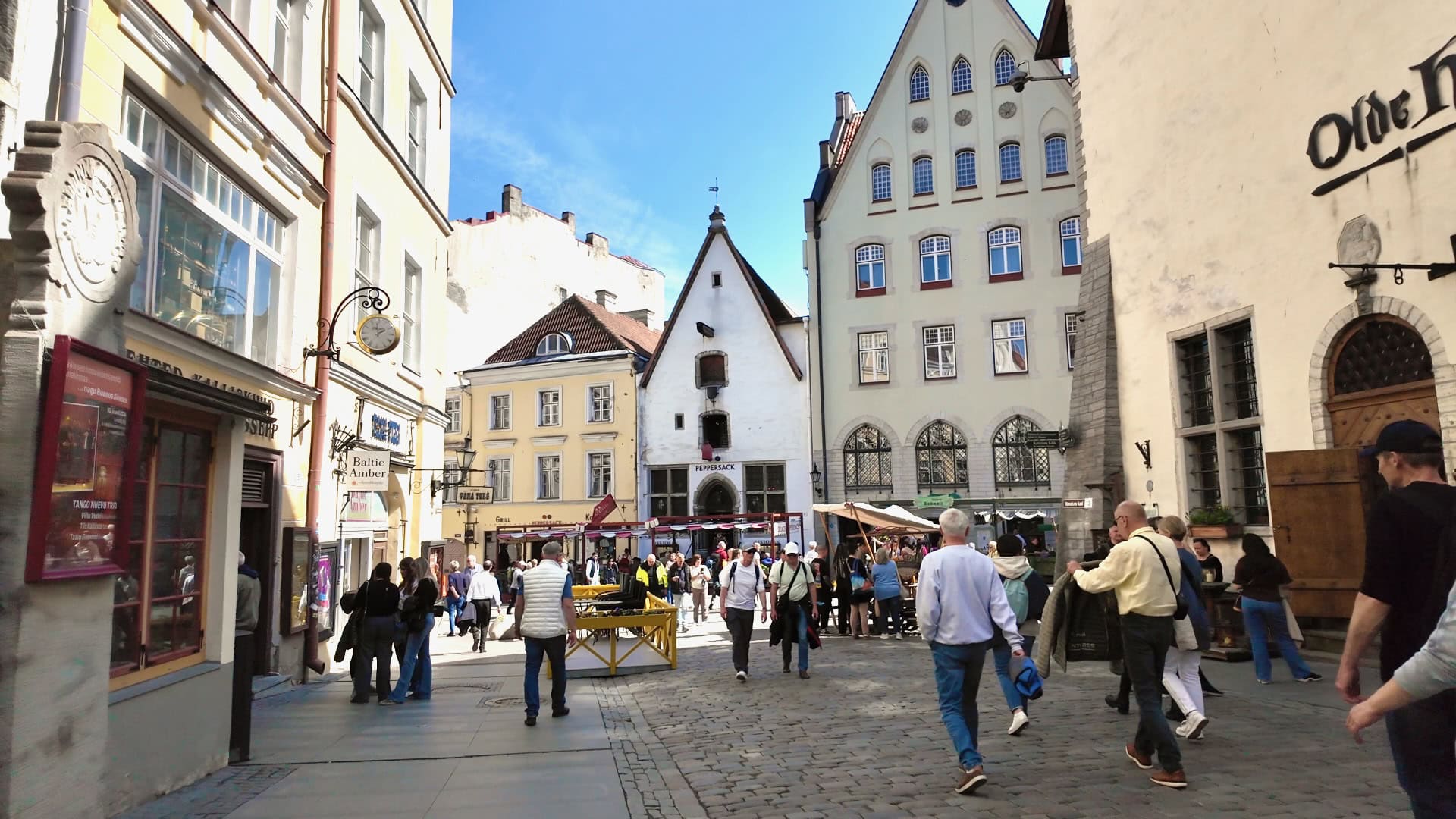
Tallinn is a very walkable city. The old town is dense enough to cover on foot in an hour — but layered enough to keep you walking for much longer. The cobblestones shift as you move between parts of the city; in the older streets they slow you down naturally, pulling you into the pace of the place.
The climb to Toompea is the city’s hinge — where the old town’s density opens up into something quieter. Fewer cars, fewer tourists. Step outside it and the city is quieter, with people moving with a purpose.
The climb to Toompea is the city’s hinge — where the density opens up into something quieter.
The quieter pleasures
Tallinn’s Small Pauses
Slow down, and Tallinn’s gentler side comes forward. The viewpoints up on Toompea lay the whole of the old town below you — red roofs, spires, the sea in the distance. There’s a garden up there too, quieter than the viewpoints, where sitting feels entirely natural. Down below, the covered market near the old station is one of the city’s real living rooms — fruit stalls, food, locals and visitors in a proportion that feels more natural than most of the old town. And the smaller parks you pass along the way are worth pausing in too.
The Travel Without Chaos Index
How Tallinn scores
Three dimensions, each out of five — not a ranking, just an honest look at what the city feels like when you slow down.
A genuinely easy city to move through — compact, layered, and clear enough to orient yourself quickly. The one limit: the main streets get crowded, but step off and it eases immediately.
Concentrated rather than spread. In the covered market you feel the city’s own rhythm — but for the most part, people in Tallinn move through the street rather than in it.
Generous and varied — from the Toompea viewpoints to neighbourhood parks and a garden up on the hill for something quieter.
On foot
A few places worth knowing
Not sights to tick off — a few suggestions for experiencing each side of Tallinn on foot. How it feels to walk, where the street life gathers, and where the city lets you stop. It’s how the video moves through the city.
Viru Gate into Town Hall Square is the natural starting point — the gate itself is one of those transitions the city gives you for free; surface, scale, sound, everything shifts in a single step. From Balti Jaam station, follow the main street into Kalamaja — wooden houses, shared streets, a neighbourhood that moves at its own pace. And Kesk Turg, out along Tartu maantee from Balti Jaam — a different layer of the city entirely.
Balti Jaam Market is where the concentration is highest — a covered market and food stalls in a hall that draws people in rather than pushing them through. Kesk Turg is the older version, a market with a different feel entirely. And Raekoja plats, the old town square, with cafés on all sides and the kind of movement that makes it easy to pause.
Toompark — a small park near the old town with water and a calm that sits just outside the main tourist flow. Lembitu park, a little further — quieter still, an easy place to settle. And Balti Jaam Market, indoors — for when the weather makes the decision for you.
This is how the video walks Tallinn — the full route is in the film.
Want a local’s stories along the way? A guided walk through Tallinn’s old town →
What we recommend
Don’t miss these
You’ll come across plenty as you explore. These are the ones we recommend making time for.
The old town — Vanalinn
St Olaf’s Church — This was once the tallest building in the world, and climbing the tower still makes the case. The stairs are narrow and spiral tight enough that you’ll want to time your visit around the crowds — early morning is best. What you get at the top isn’t a platform so much as a narrow walkway wrapped around the spire, wind included, with the old town’s rooftops laid out in every direction and the sea beyond them. It’s the one view in Tallinn that costs you some effort to earn, which is exactly why it’s worth it.
St Catherine’s Passage — A narrow medieval lane of workshops between two streets, easy to miss if you’re not looking for the gap in the wall.
Great Guild Hall — The grand Gothic guildhall, now the Estonian History Museum, worth a look even from outside.
Up on Toompea
Alexander Nevsky Cathedral — The onion domes are the thing everyone photographs, and for once the photograph doesn’t oversell it. It sits directly across from the parliament building, an odd and deliberate pairing — Orthodox cathedral facing secular power, built in 1900 partly as a political statement by the Russian empire and still a point of quiet tension for some Estonians today. Inside, it’s dim and heavy with incense, mosaics catching what little light there is. You don’t need long here — ten minutes is enough — but skip it and you’ve skipped the most photographed building in the country.
Kohtuotsa & Patkuli viewpoints — The classic outlooks over the red roofs and spires, best in the low light of early morning or late afternoon.
Toompea Castle — The seat of parliament, at the top of the upper town — you can’t go in, but the pink façade and the flag tower are worth the walk past.
Beyond the walls
Kadriorg Park & Palace — Peter the Great built this for his wife Catherine in 1718, and the baroque palace still anchors one of the city’s most pleasant green spaces — wide paths, a pond, enough distance from the old town that the crowds thin out fast. The palace itself now houses part of the Kumu art museum’s collection, but the grounds are worth the trip alone: formal gardens giving way to looser parkland, with the presidential residence tucked just beyond. Kumu’s main building, all glass and limestone, sits a short walk further in and is one of the better modern art museums in the Baltics if you have the time.
Seaplane Harbour — The Lennusadam maritime museum in a vast seaplane hangar on the waterfront, worth it even if naval history isn’t usually your thing.
Pirita & the coast — The beach, marina and convent ruins a short way northeast along the sea, a proper change of pace from the old town.
St Olaf’s tower, the museums and Kadriorg Palace are the ones that need a ticket. Everything else — the squares, the viewpoints, the lanes — you’ll just walk into.
Short on time? Do two: St Olaf’s for the view, Alexander Nevsky for the five minutes that are worth it. Everything else you’ll probably stumble into anyway.
Where to stay
Three hotels, all worth the stay
Where you stay shapes how a city feels. For Tallinn we stayed in three hotels worth recommending — each a different version of the city, chosen so you can match the stay to the kind of trip you’re after.
Tallinn is one of three cities on the Baltic Capitals trip. See the whole route →