Just passing through
Vilnius
Smaller than you expect for a capital — and a city that keeps surprising you on foot.
Vilnius is smaller than you expect for a capital — compact enough to cover on foot, yet arranged so it keeps surprising you as you move. It doesn’t organise around a single centre. It layers: old town, castle hill, a small river, and across the water a neighbourhood with its own rules.
The lay of the land
How the city is built
The old town is large by European standards — one of the biggest in the region, and almost entirely walkable. But Vilnius doesn’t gather around one obvious centre; it layers instead. Around the old town sit castle hill, the small Vilnele river, the parks, and across the water Užupis, a quarter that operates by its own rules. Walking here is largely about following those layers as the city hands you from one to the next.
A few neighbourhoods
How the city changes
A few areas give a sense of how the city shifts as you move through it.
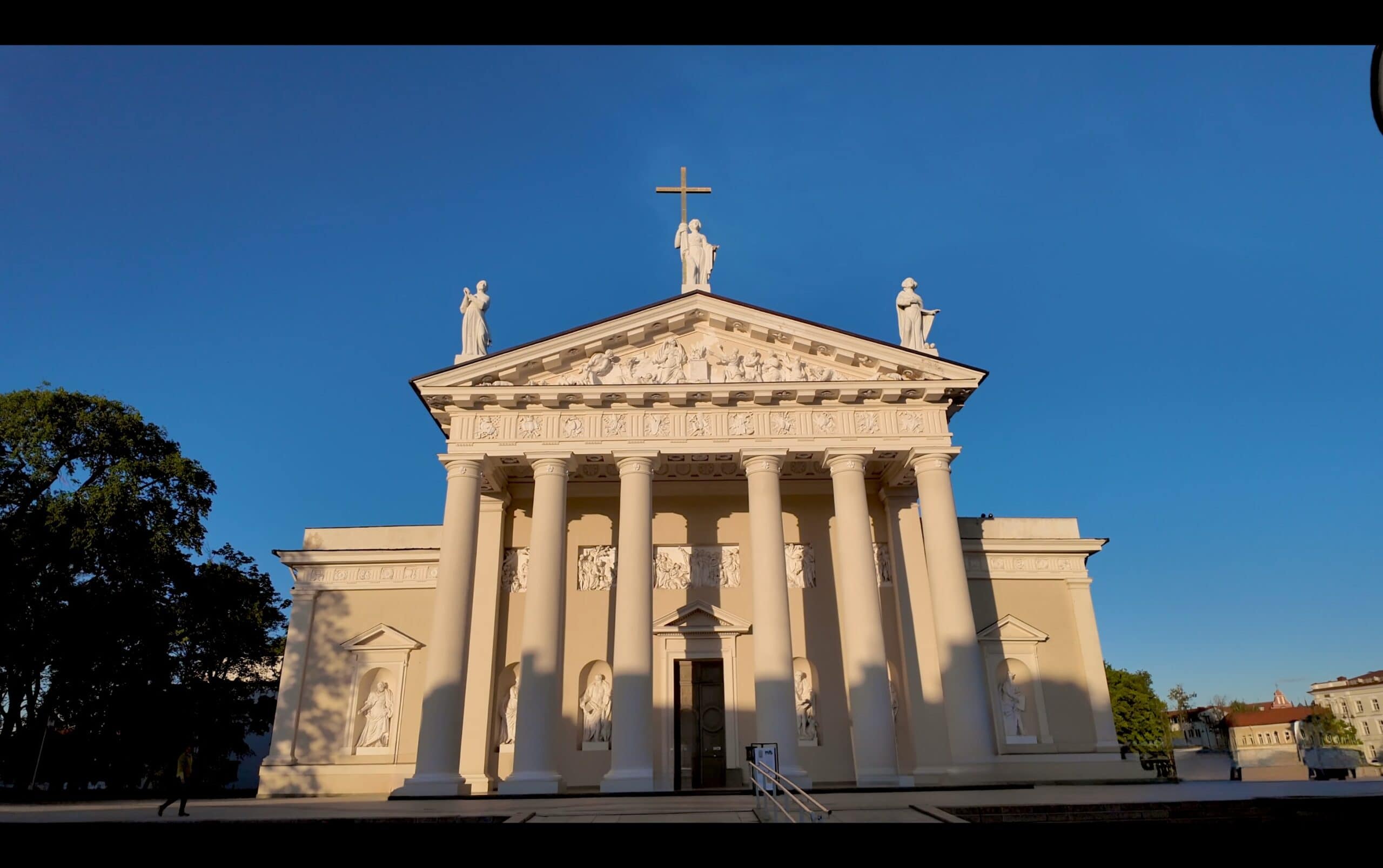
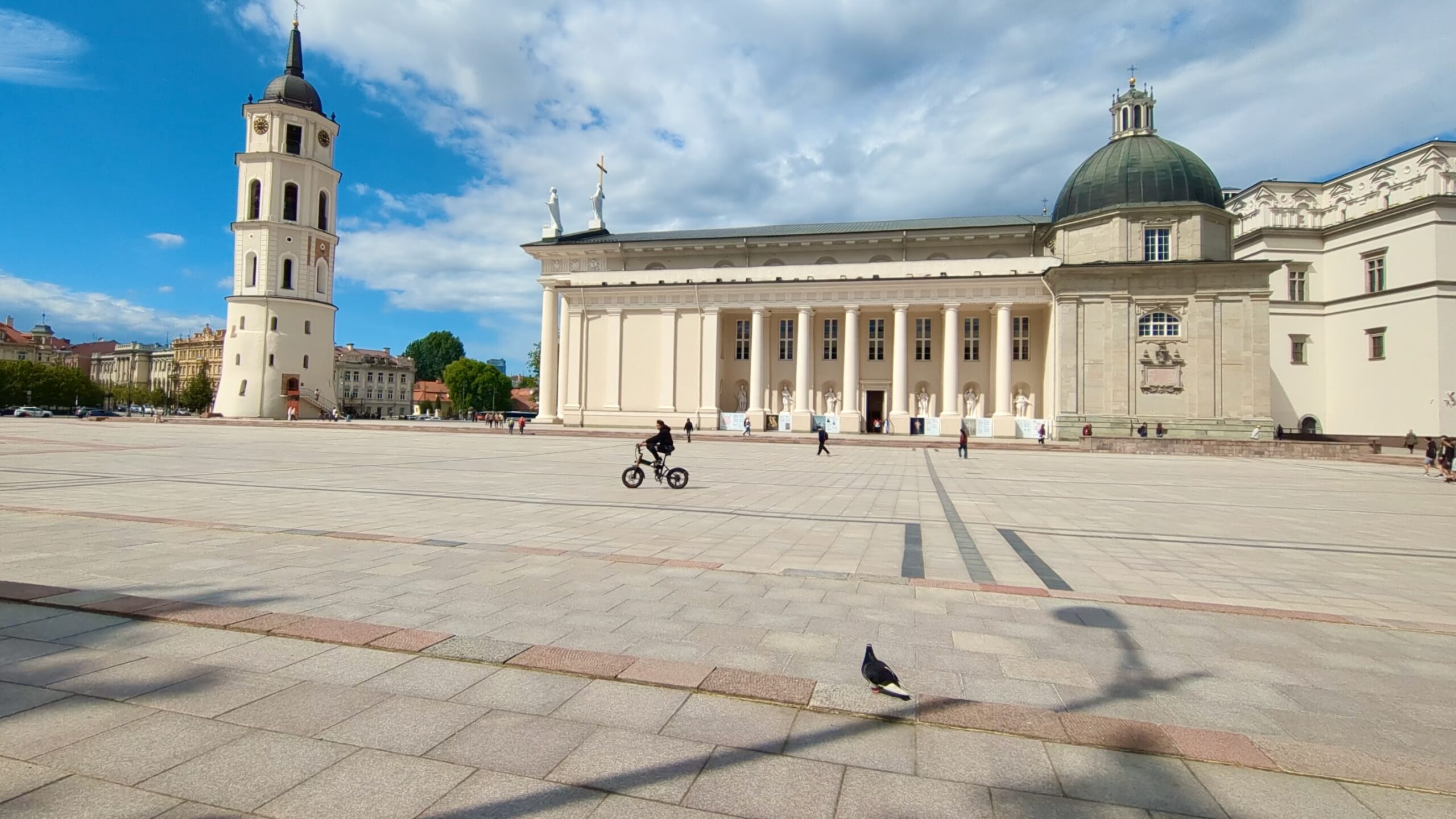
Cathedral Square & Gediminas Avenue — the natural spine, from the medieval heart of the city out to its wider, more open side. Long, gradual, easy to follow.
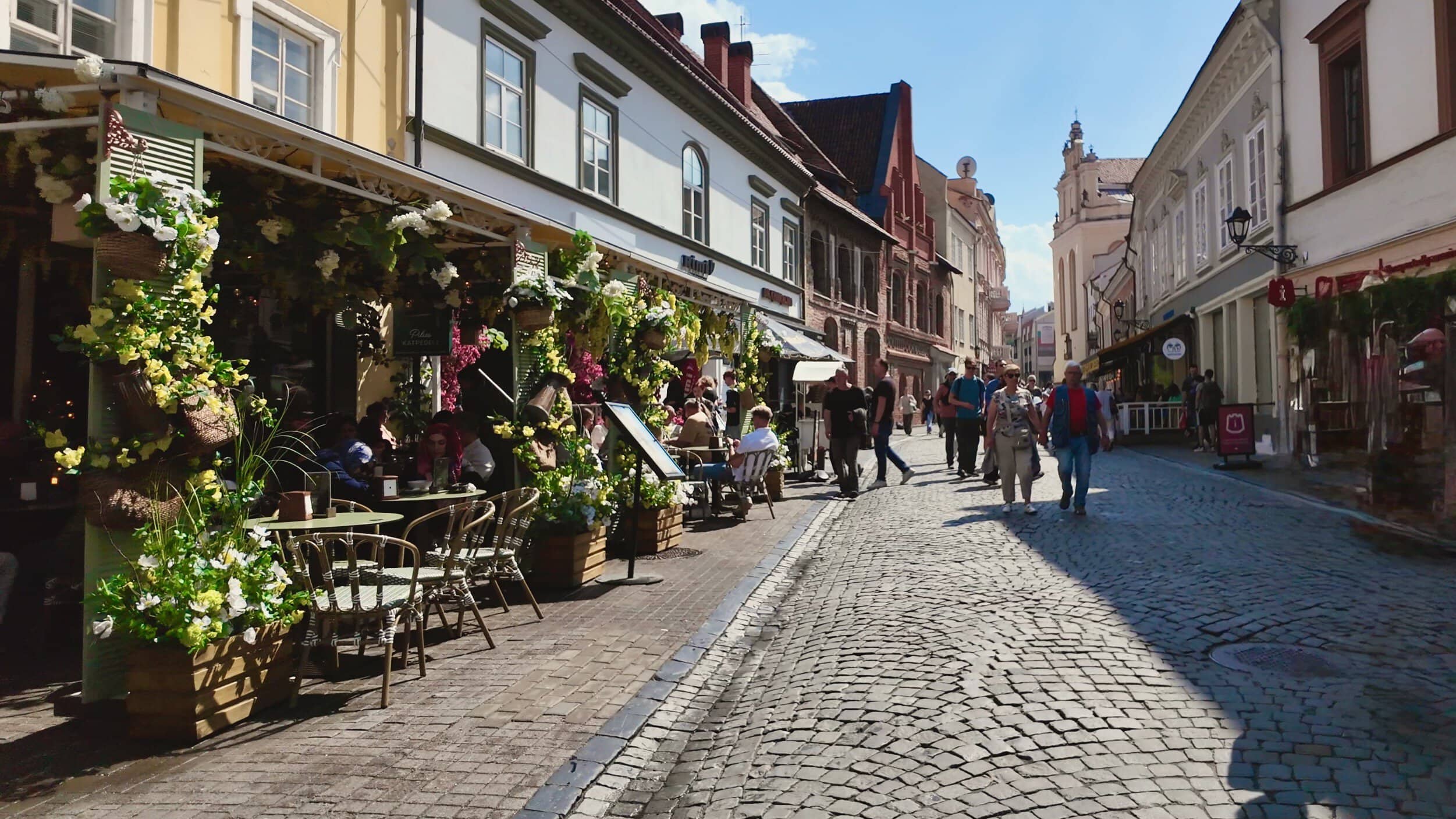
Pilies Street & the old town — narrower, older, where the side streets pull you off in both directions. The kind of walking where you lose track of time without losing your bearings.
Užupis — across the Vilnele river, a neighbourhood with its own particular character. Worth the short detour.
How it feels to walk
Walking Vilnius: A City Built for It
Vilnius feels like a city that was planned for walking — and then actually built that way. The proportions are almost always right: streets wide enough to move through comfortably, but not so wide that they lose their sense of enclosure. The buildings hold the space, the trees line it, and the activity at street level gives the walking a reason to continue. Traffic has been kept to the edges; there are few points where you have to negotiate with a car.
Gediminas Avenue is the clearest example done well — a long, open boulevard with near-perfect proportions, trees the full length of it, benches placed generously. The old town works at a different scale: cobblestones that slow you down, buildings that close in just enough to make every street feel like it’s leading somewhere worth going. What you notice, after a while, is how rarely the city feels unwelcoming — there’s almost no dead space.
Vilnius doesn’t just permit walking. It encourages it.
The quieter pleasures
Where Vilnius Lets You Land
Vilnius is generous when it comes to pausing — and treats that generosity as something structural, not decorative. Bernardine Garden is the most obvious one, and it earns it: green and quiet at the old town’s edge, the Vilnele alongside and a gothic church rising above. People actually sit there. Gediminas Avenue offers a different kind of pause, benches all along it, the city moving past while you stop. Further out the parks turn greener and quieter, and the meadows across the river let the city feel less like a city for a while. Even on the streets you feel it — trees lined along the avenues, framing the space overhead.
The Travel Without Chaos Index
How Vilnius scores
Three dimensions, each out of five — not a ranking, just an honest look at what the city feels like when you slow down.
Built for walking in practice, not just theory — right proportions almost everywhere, traffic kept back, an old town with a natural logic, and a boulevard that shows what a boulevard can be. Very little dead space.
Relaxed and real rather than performed. Pilies Street holds visitors and locals at once; the market halls add a local layer, the station area a rawer one. What’s slightly missing is the informal, spontaneous corner — the warmth is there, the form not quite.
Benches along the avenue, a garden at the old town’s edge, meadows by the river, trees lining the streets. Vilnius builds places to land in, rather than adding them as an afterthought — and people use them.
On foot
A few places worth knowing
Not sights to tick off — a few suggestions for experiencing each side of Vilnius on foot. How it feels to walk, where the street life gathers, and where the city lets you stop. It’s how the video moves through the city.
Cathedral Square to Gediminas Avenue — the natural spine of Vilnius, from the medieval centre out to the wider city; easy to follow, and rewarding the whole way. The Gate of Dawn down through the old town’s smaller streets — where you’ll find yourself making unplanned turns and not minding at all. And for a different register entirely, from the Central Station along Pylimo Street to Gediminas Avenue — a wider, quieter approach that gives you another side of the city.
Pilies Street — the old town’s main artery, and more layered than it looks; a tourist area in name, but with enough everyday life mixed in that it doesn’t feel like one. The covered market halls near the station — local, direct, worth finding. And the area around the station itself, if you want a less polished version of the city — still readable, just less curated.
Bernardine Garden — the city’s most natural pause, green and active, right at the old town’s edge. Gediminas Avenue — find a bench, sit down, and let the city move past you. And Reformatų Park, for a quieter version — further out, more green, the kind of place that holds you without trying.
This is how the video walks Vilnius — the full route is in the film.
Want a local’s stories along the way? A guided walk through Vilnius’ old town →
What we recommend
Don’t miss these
You’ll come across plenty as you explore. These are the ones we recommend making time for.
The old town
Vilnius University — Founded in 1579, it’s one of the oldest universities in Eastern Europe, and it doesn’t hide behind a single gate the way most campuses do — thirteen interconnected courtyards, each with its own character, some quiet enough that you’ll forget you’re in the middle of the old town. The real reason to go, though, is the library’s Grand Hall: floor-to-ceiling frescoes painted in the 1970s, tracing the history of Lithuanian science and learning, in a building that’s been a working library since the 16th century. It’s easy to walk through the courtyards for free; the frescoed hall needs a ticket, and it’s worth it.
St Anne’s Church — The delicate red-brick Gothic church, one of the city’s most photographed — Napoleon is said to have wanted to carry it back to Paris brick by brick.
Town Hall Square — Rotušės aikštė, the neoclassical square at the foot of the old town, worth a pass-through even without an event on.
Up on the hills
Gediminas’ Tower — What remains of the upper castle, and the closest thing Vilnius has to a single defining image — the red brick tower on its green hill, visible from most of the old town below. There’s a small museum inside covering the city’s early history, but the real draw is the platform at the top: the old town spread out in one direction, the newer city and the river in the other. A funicular runs most of the year if you’d rather skip the climb, though the walk up is short enough that most people don’t bother with it.
The Three Crosses — The white monument on the green hill opposite Gediminas’ Tower, a classic outlook over the old town from the other side.
Beyond the centre
KGB Museum — Officially the Museum of Occupations and Freedom Fights, and one of the more sobering things you’ll do in Vilnius. This was the KGB’s Lithuanian headquarters until 1991, and the building hasn’t been softened for visitors — the basement holds the original prison cells, an execution room, and padded cells that were used for solitary confinement, largely untouched since the Soviets left. It’s not a long visit, maybe an hour, but it’s not one you’ll forget either. Go with the intention of reading, not just walking through — the context on the walls does most of the work. Tickets for the KGB Museum →
MO Museum — The modern-art museum in a striking Libeskind building just outside the old town, worth it for the architecture alone.
The Bastion of the City Wall — Bastėja, the restored artillery bastion in the old defensive line, with a small museum built into the tunnels below it.
The tower, the KGB Museum and the university’s frescoed hall are the ones that need a ticket. Everything else — the squares, the courtyards, the streets — you’ll just walk into.
Short on time? Do two: Gediminas’ Tower for the view, the KGB Museum for the history. Everything else you’ll probably stumble into anyway.
Where to stay
Three hotels, all worth the stay
Where you stay shapes how a city feels. For Vilnius we stayed in three hotels worth recommending — each a different version of the city, chosen so you can match the stay to the kind of trip you’re after.
Vilnius is one of three cities on the Baltic Capitals trip. See the whole route →
A closer look
The old town, at street level
The video at the top walks all of Vilnius. This one stays in the old town, early on a Sunday morning, before the day has started — without the analysis. Just the streets, at street level.