Just passing through
Brussels
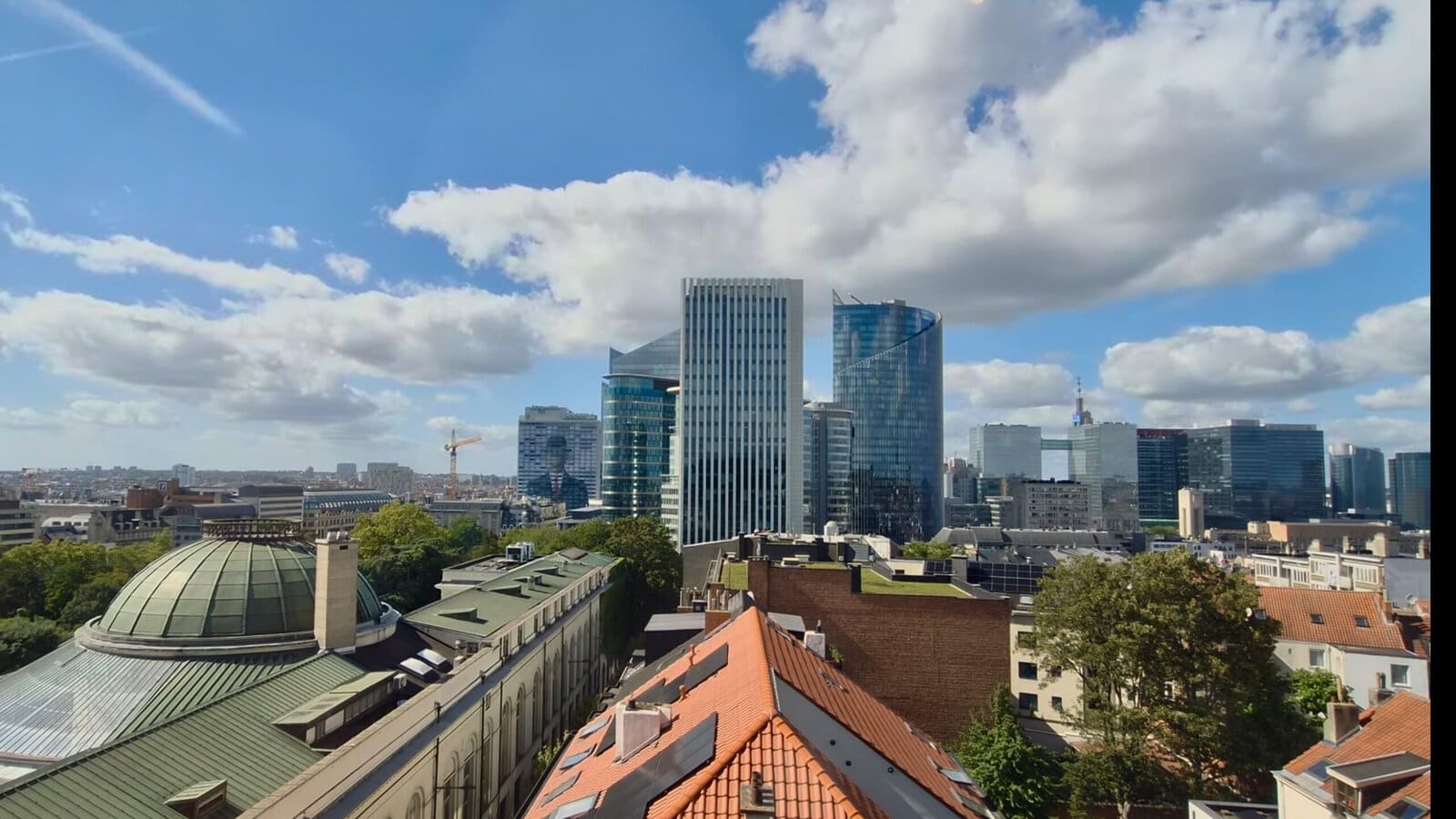
Small streets, café terraces and a few very wide roads — a city that changes character from one block to the next.
Brussels has a reputation for being a bit boring. On foot, the picture looks more mixed than that. There are small streets that keep turning, café terraces that fill up as the day goes on, and green pauses in between. There are also wide roads where it is mostly the traffic you notice. Which of the two you get often depends on the next corner.
The lay of the land
How the city is built
Brussels isn’t always easy to make sense of from the start. The area around the centre is only one part of it, and several of the places that give the city its character sit just outside it. As you start walking, you begin to recognise the different parts of the city. Not by name, but by how they feel.
A few neighbourhoods
How the city changes
Three areas make a good place to begin. They are examples, not the whole map.
Sainte-Catherine — relaxed, with terraces around the church and restaurants in the streets nearby.
The Marolles — smaller streets with little shops, and a flea market on the square.
Ixelles — busy around Flagey. The ponds make it calmer, and it gets greener the further south you go.
How it feels to walk
How It Feels to Walk Brussels
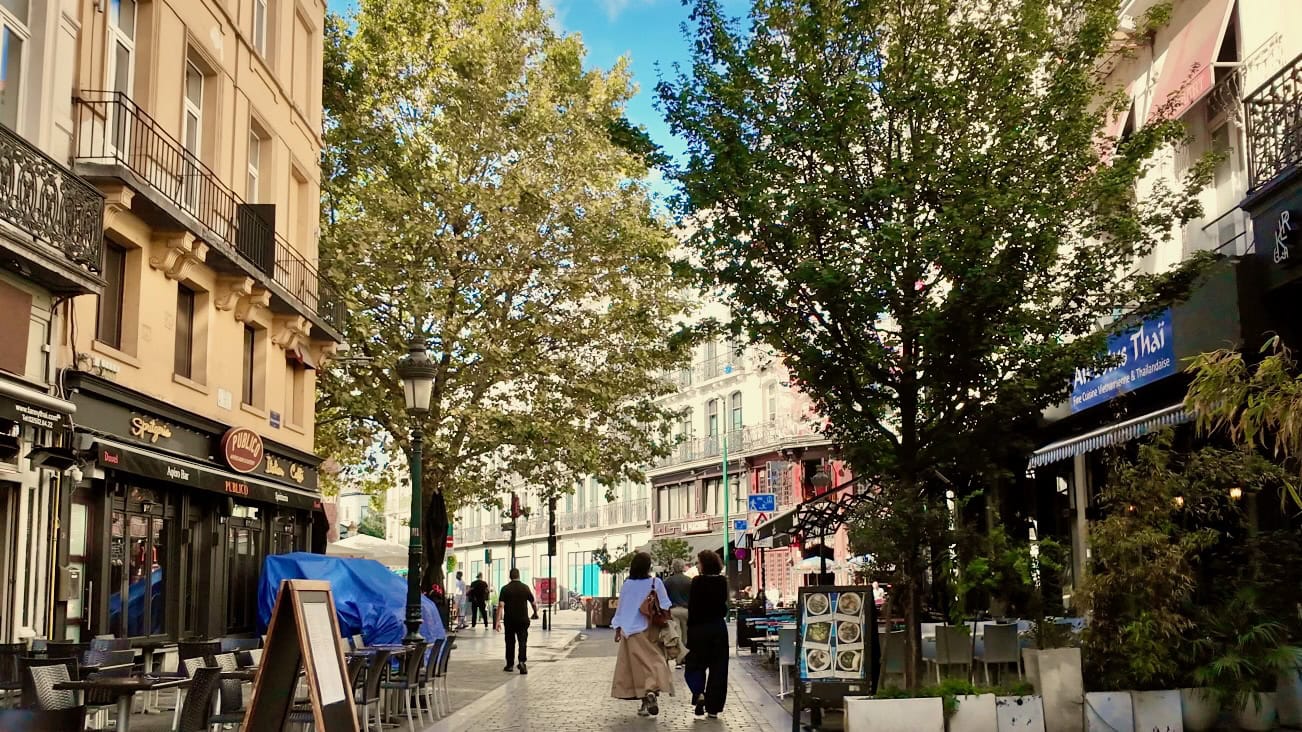
Brussels is easy to wander when the streets stay small. You turn a corner and there is another street to take. Shops, cafés and doorways keep things going along the way, so you don’t always need a destination. This works especially well in the older parts of the city, where the streets are compact and there are many ways to move through them.
A walk can also change quickly. You can leave a busy junction, and a few minutes later the streets feel calmer. Keep going, and it gets greener.
It can go the other way, too. On a smaller street with shops, cafés and people close around you, everything feels near. Then the road gets wider, the buildings get taller, and things spread out. Traffic alone isn’t the difference. Some streets carry cars, trams, bikes and people all at once, while shops, cafés and entrances keep life going at street level. They can feel busy and still be pleasant to walk. On the wide roads that are mostly there for the traffic, the buildings sit further apart, there may be less happening at street level, and it is the road you notice.
So in Brussels, walkability is not only about traffic. It is also about the scale around you.
The quieter pleasures
What you’ll notice if you slow down
You see a lot of people in Brussels, though that doesn’t always mean street life. Around the big junctions, much of it is movement: people crossing roads, changing trams, heading somewhere else. A few streets later the pace often changes. People slow down at a market stall, café tables fill up, and small shops keep people going in and out. That is when the street starts doing more than carrying people through.
Places to pause are a little more scattered. Brussels has parks and green spaces, and there are plenty of cafés. A café table is a pause in itself, though it isn’t the same as a public place where you can simply sit down without ordering anything. On some walks you can go quite a while without coming across one. Then you find a small garden, a square, or some water and green along the way, and the walk feels different for a while.
The Travel Without Chaos Index
How Brussels scores
Three dimensions, each out of five — not a ranking, just an honest look at what the city feels like when you slow down.
Easy to wander where the streets stay small. A walk can change quickly, and on the wide roads it is the road you notice.
There is a lot of it where people slow down: the market, the shopping streets and the café terraces. Between them are stretches that are more about getting somewhere.
A café table is easy to find. Natural places to pause, such as a small garden or a bench by the water, come along less often.
On foot
Want to Know What Earns These Scores?
A few places that show Brussels at its best for walking, for street life and for pausing. They are the same places the video visits.
The Marolles, from Rue des Renards up to Rue Haute: small streets with plenty of turns. The loop between Saint-Géry and Sainte-Catherine, a compact stretch of shops and cafés in the centre. And for a longer walk, start at Flagey and follow the ponds south towards the Abbaye de la Cambre. It starts busy, then it gets calmer, then greener.
Place du Jeu de Balle, the square in the Marolles where the flea market gives people a reason to slow down and browse. Rue Haute, close by, where small shops and cafés spread the life along the whole street. And Sainte-Catherine, with terraces, shops and restaurants all around the church.
Petit Sablon, a small, formal garden opposite the church, where you can step out of the street and sit. Mont des Arts, central and urban, with the city moving all around it. And the ponds in Ixelles, with water, trees and places to slow down along the walk.
This is how the video walks Brussels — the full route is in the film.