Just passing through
Rotterdam
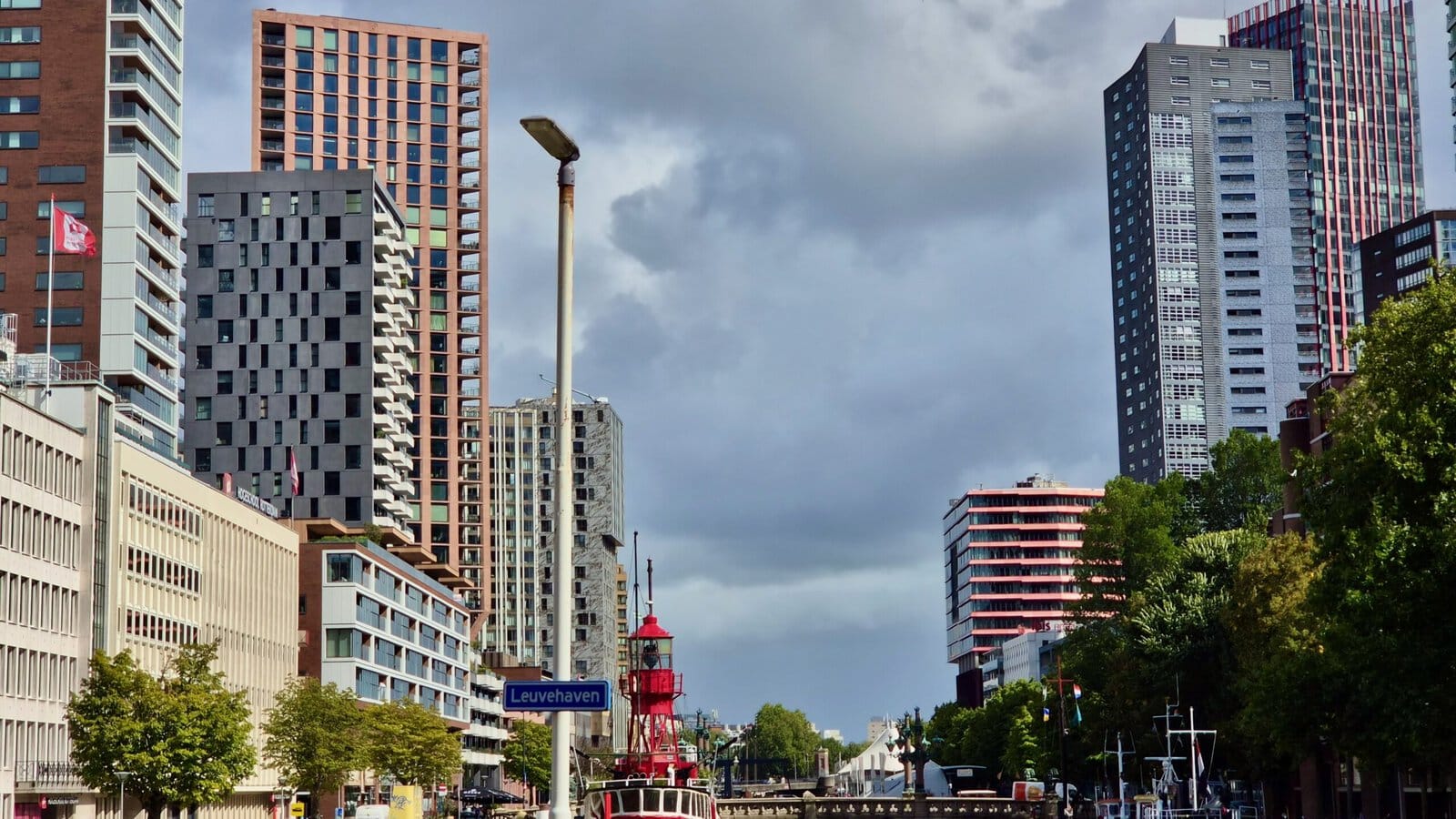
Skyscrapers in the distance, smaller streets underfoot.
From a distance, Rotterdam looks like a very big city — skyscrapers and modern buildings, hard to miss. Walk through it and something else happens: the buildings get lower, the streets get smaller, and the city feels closer than it first looked. Watch the walk above, then see below how Rotterdam scores on the Travel Without Chaos Index.
What we recommend
The Top 5 in Rotterdam
Five classic sights. See them anyway — here’s what to know before you do.
Markthal — A horseshoe-shaped market hall with homes built into the arch above it, and a huge painted ceiling of fruit, flowers and fish. Besides being one of Rotterdam’s best-known buildings, it’s also a good place to see street life working indoors, with food counters and people constantly coming and going.
Cube Houses — Tilted cubes on top of pylons, close to Markthal and right by Blaak station. Most are homes, so you look rather than go in, but one cube is open to visitors as a show home.
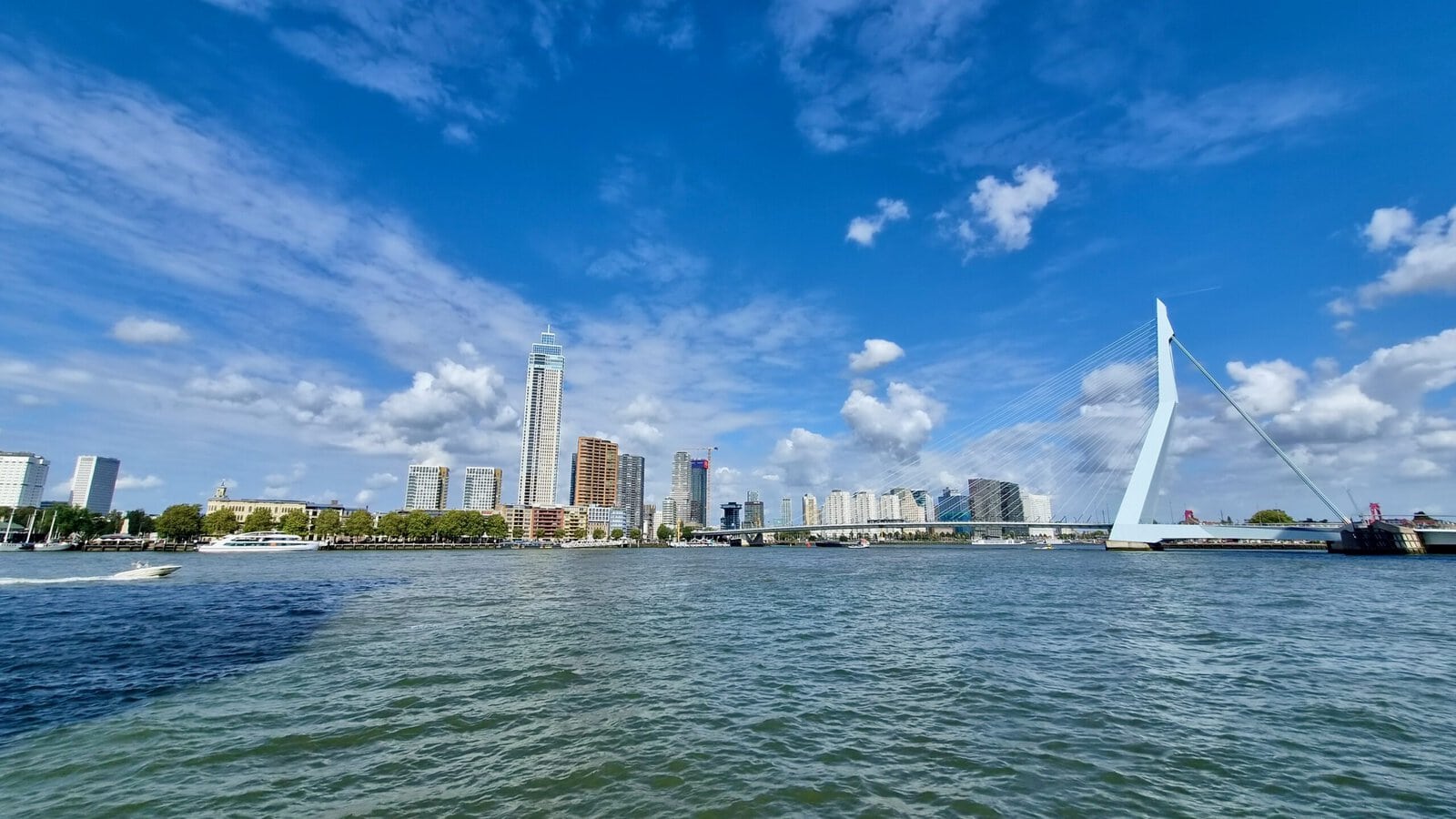
Erasmus bridge — The cable-stayed bridge known as “the Swan”, linking the centre with Kop van Zuid. It’s one of the city’s best-known landmarks, but it’s also simply how you get across the river, on foot, with the skyline opening up as you go.
Euromast — A tall observation tower in the park by the river. Go up for the view over the whole city, and see how the skyline you’ve been walking under fits together.
Delfshaven — The old harbour district in the west, one of the parts of Rotterdam that came through the 1940 bombing. Canal houses, a windmill and the Pilgrim Fathers Church, at a smaller and older scale than the centre.
The Euromast and the show home in the Cube Houses need a ticket. Everything else, you just walk into.
The lay of the land
How the city is built
Rotterdam is easiest to understand with the river in mind. The centre sits on one side of it and Kop van Zuid on the other, and the Erasmus bridge is what brings you across, with the skyline close beside you. The skyscrapers are hard to miss, but on foot they tend to stay in the background rather than closing in around you.
A few neighbourhoods
How the city changes
A few places give a sense of how Rotterdam shifts as you move through it — a starting point, not the whole map.
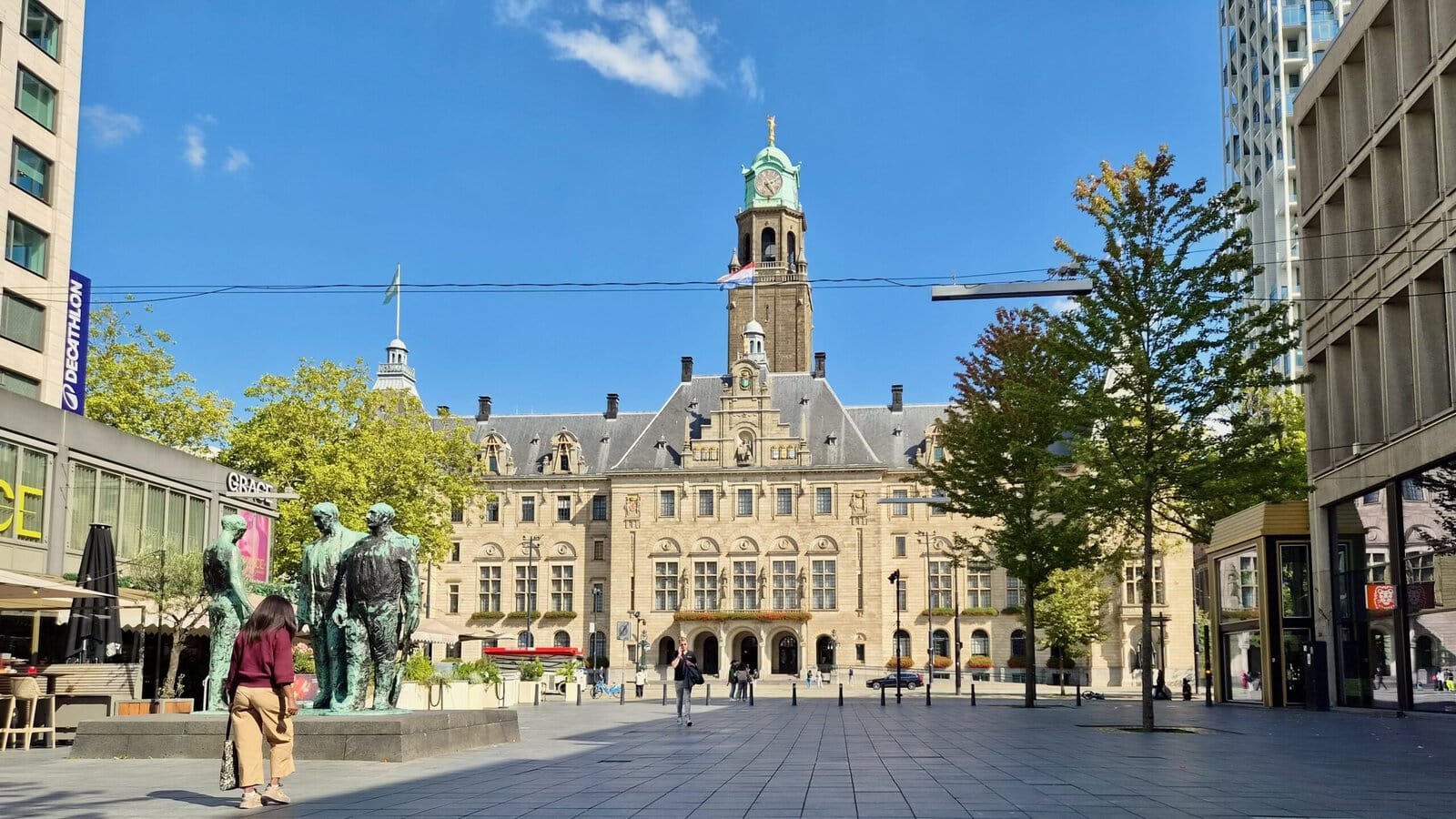
Coolsingel — the big street through the centre, with plenty of room around you even with traffic beside you.
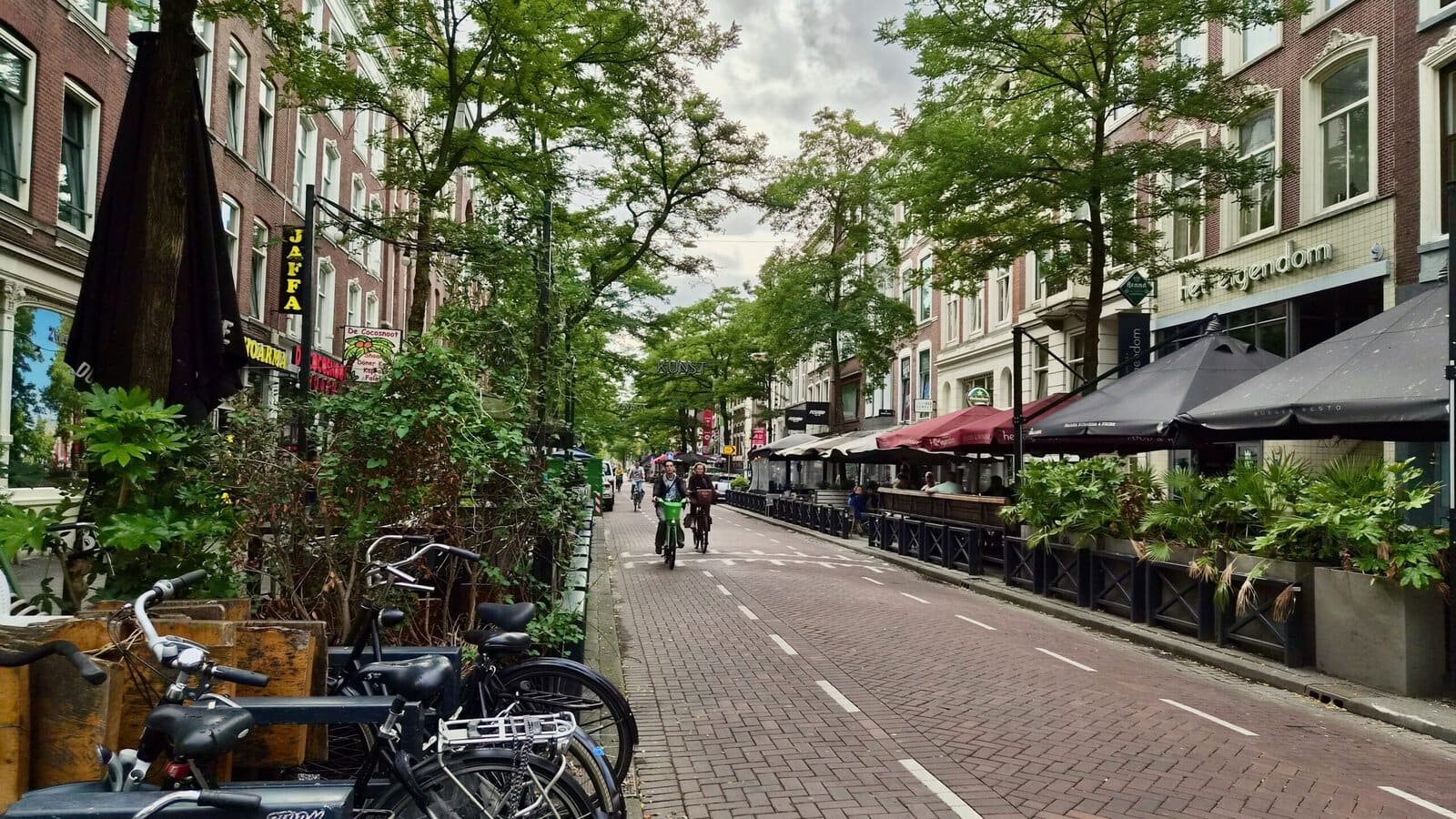
Witte de With — a smaller street, where restaurants and terraces come right up to the pavement.
Kop van Zuid — on the other side of the river, where the Erasmus bridge brings you across and the skyline sits close.
How it feels to walk
How It Feels to Walk Rotterdam
Rotterdam gives you room to walk, and sometimes a lot of it. Even some of the larger streets leave plenty of space for people on foot, and in the centre a few have no cars at all. It’s flat, too, which helps.
Some streets are wide and open, with the skyscrapers behind them. In others the buildings come closer and the streets get smaller — and the skyscrapers are still there in the background.
It isn’t entirely smooth. Every now and then a major road gets in the way: the traffic takes over, and you have to think about how to get across. It happens often enough to notice, but once you’re across, walking is easy again almost straight away.
Street life has a rhythm of its own here. There’s activity almost everywhere — people walking, cycling, shopping, heading somewhere — but much of it is people on their way. Then, in certain places, people sit down, talk, meet, eat or just stay for a while, and the street feels different. That kind of street life isn’t spread evenly across Rotterdam. It gathers in pockets, while everything around them keeps moving. After a while you stop looking for the busiest street and start looking for the one where people stay — and if you’re anything like us, that’s when you slow down and do the same.
The quieter pleasures
What you’ll notice if you slow down
Rotterdam gives you quite a few ways to slow down. The water helps: along the river, places to sit keep appearing, often with enough space around them to stay for a while rather than just stop for a minute. There are green spaces too, sometimes surprisingly close to the busier streets, offering somewhere quieter without taking you far from the city.
And then there are the smaller, more everyday pauses — little parks and neighbourhood spaces where sitting down feels like part of the day rather than something you planned. Slowing down here doesn’t always mean finding one particular place. Often the option is simply there when you need it. It isn’t completely even, though: some streets give you plenty of room to walk and almost nowhere that makes you want to stay. Move on, and another place to pause usually isn’t far away.
The Travel Without Chaos Index
How Rotterdam scores
Three dimensions, each out of five — not a ranking, just an honest look at what the city feels like when you slow down.
Easier than it looks from a distance. The big roads slow you down now and then, but usually not for long, and the space around you comes back almost straight away.
People are out almost everywhere, but street life stands out where they stay — at the terraces, in the squares, in the places that work like a shared living room.
There, but not everywhere. By the water, in the green spaces and in the small neighbourhood parks, it’s easy to sit down for a while.
On foot
Want to Know What Earns These Scores?
Walkability, Street Life, Places to Pause — here’s what each looks like on the ground.
Lijnbaan — completely free of cars and easy to walk. Coolsingel, around the city hall — the traffic is still there, but there’s enough space around you for it to feel open and comfortable on foot. And Willemsbrug — a gentle walk across the river, with Erasmusbrug and the skyline opening up as you go.
Witte de Withstraat — restaurants, bars and terraces right up to the pavement, so the social life is part of the street. Binnenwegplein — more everyday, with people of different ages sitting and staying, a bit like a shared living room in the middle of the city. And Markthal — a big indoor space that works like a street, with food counters and people constantly coming and going.
Noordereiland quay — benches along the water, with the river and the big city in front of you. Museumpark — a green space in the centre, calmer than the streets around it. And Wijkpark Oude Westen — a small neighbourhood park that feels like somewhere people actually use.
This is how the video walks Rotterdam — the full route is in the film.
Where to stay
Three hotels, all worth the stay
Where you stay shapes how a city feels. For Rotterdam we stayed in three hotels worth recommending — each a different way into the city.