Just passing through
Riga
Grand, layered, and far more interesting once you walk beyond the obvious streets.
Riga is a city of layers. The old town reads easily — compact, cobbled, walkable — but the city is bigger than it first feels, and stopping inside the old town means missing most of what makes it interesting. It gives more to anyone willing to walk a little further.
The lay of the land
How the city is built
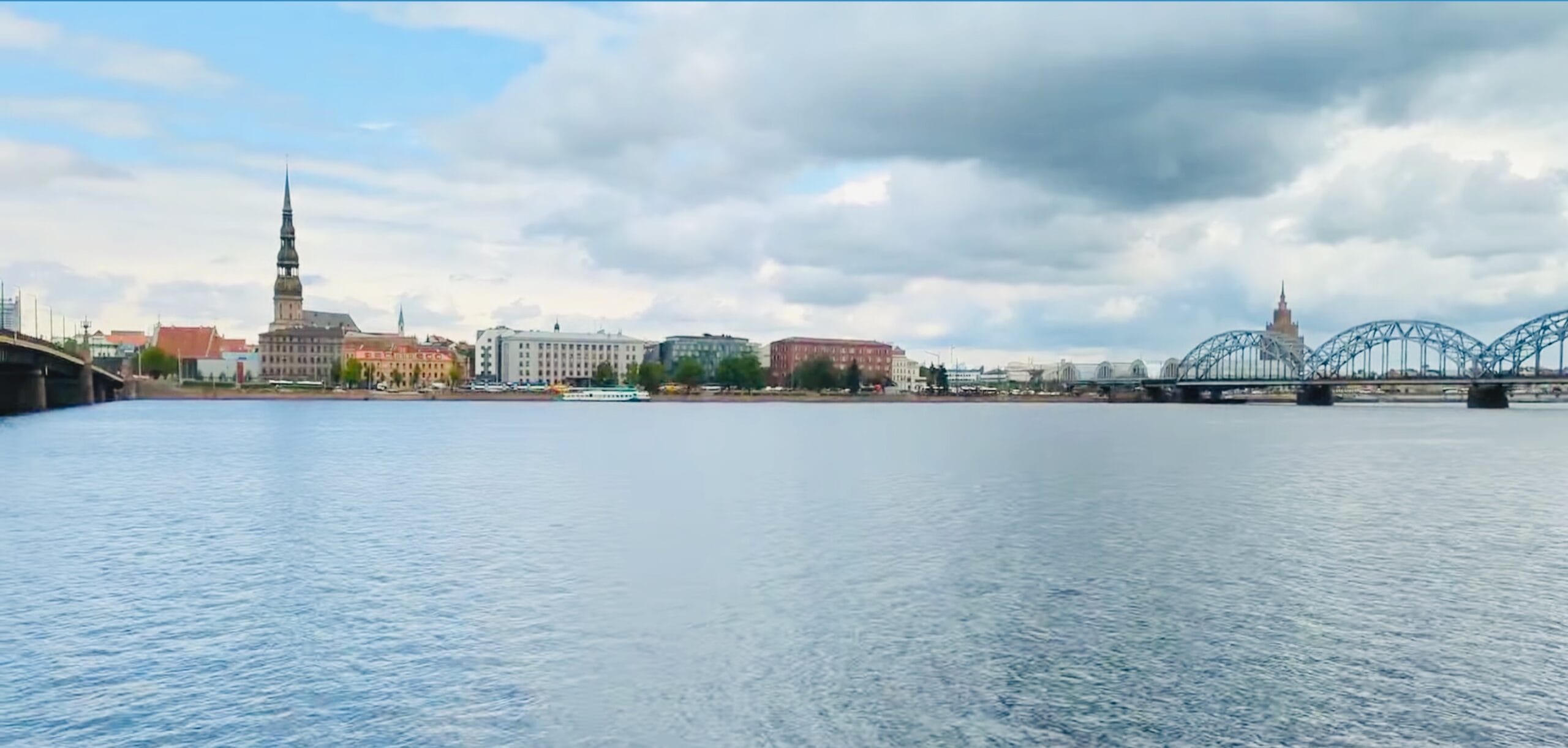
Riga sits on the Daugava, a wide river that cuts through the city and gives it a horizon most city centres don’t have. Vecrīga, the old town, is the obvious entry point — stone streets, spires, a cathedral, a town hall square, all compact and easy to walk into. But the city opens well beyond it. Cross one of the bridges and the whole old town suddenly sits in front of you, framed by the river and the sky — and you understand the place better from that bank than from inside it.
A few neighbourhoods
How the city changes
A few areas give a sense of how Riga shifts as you move through it — a starting point, not the whole map.
Vecrīga — the old town. Stone streets, spires, a cathedral and a town hall square. Compact and walkable, where most visitors start and stop — though there’s far more once you step past it.
The art nouveau district — around Alberta iela, a different city entirely. Wider streets, ornamented facades, a quieter scale. Less visited and more rewarding; the kind of place you drift along, looking up more than ahead.
Around Tērbatas iela — where Riga keeps its own everyday rhythm. Cafés with outdoor tables, people moving without an obvious destination, a city being visited and lived in at the same time.
How it feels to walk
Walking Riga: Old Town, Boulevards and the River
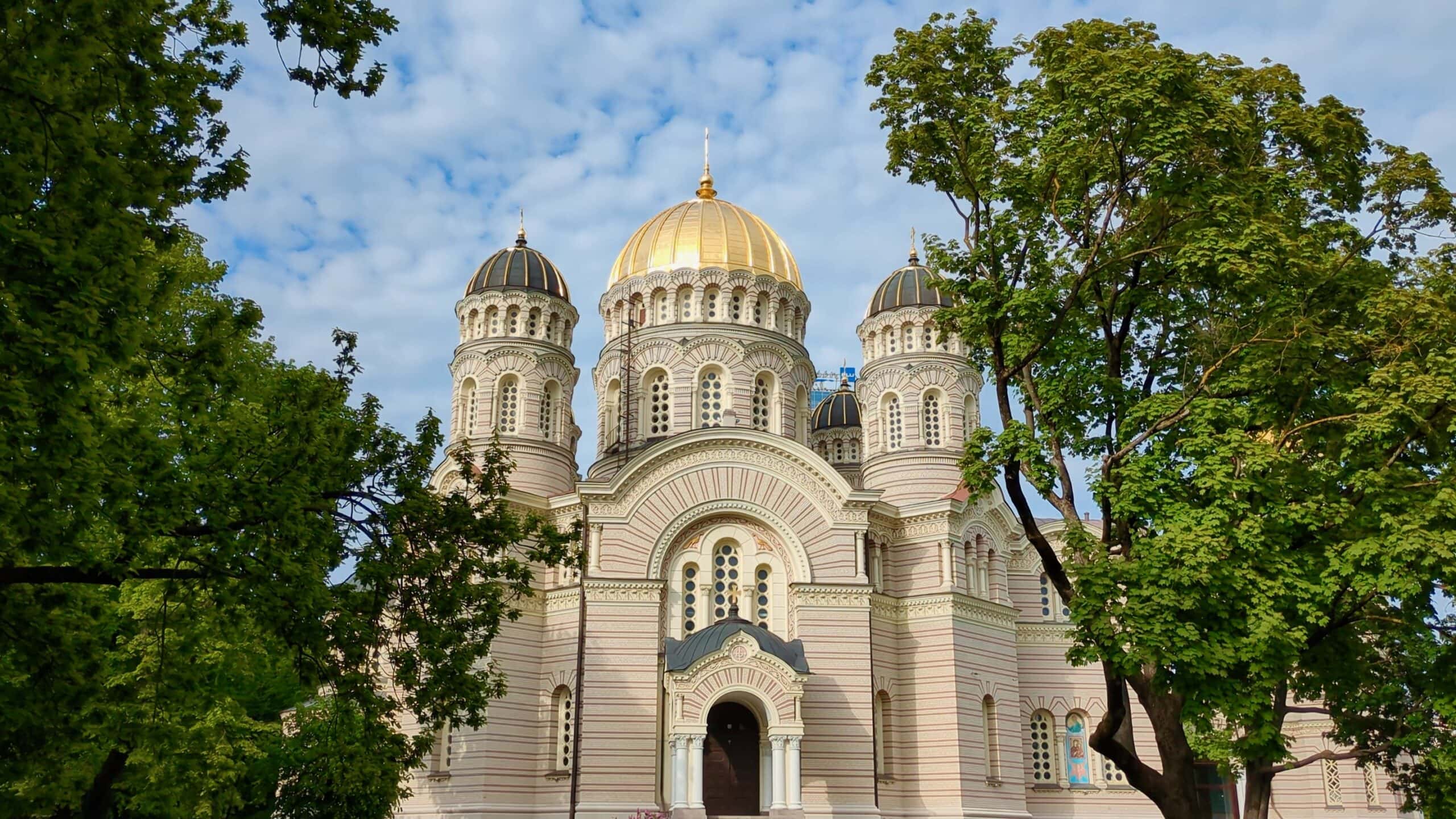
Riga is an easy city to walk. The old town is compact enough to read quickly and varied enough to keep you out longer than you planned, the cobblestones reminding you where you are with every step. Outside it, the city opens into a different scale — wider streets, taller buildings, a boulevard logic that’s more formal and more open at once.
What interrupts it are the bigger roads. Every so often you stop and wait for the traffic before carrying on; it breaks the rhythm for a moment, then you pick it up again. The parks carry real weight here — not incidental green space, but load-bearing, the places the city uses to breathe between its heavier streets.
The parks here aren’t incidental green space — they’re load-bearing.
The quieter pleasures
Riga’s Parks and River Pauses
Slow down, and Riga’s gentler side comes forward. The parks are generous — well-kept, well-used, placed exactly where the city needs to breathe. A café table on one of the quieter streets lets you sit still while the city moves around you, a good place to let Riga arrive rather than chase it.
And then there’s the river. Cross the bridge and walk the promenade on the other bank — easy to miss if you stay in the old town. More air, quieter, and the whole of Vecrīga suddenly in front of you. You’ll feel it the moment you reach the other side.
The Travel Without Chaos Index
How Riga scores
Three dimensions, each out of five — not a ranking, just an honest look at what the city feels like when you slow down.
Compact and easy to move through in the old town, and rewarding to the slower walker around Alberta iela. The traffic arteries interrupt the flow in places, and the boulevard scale changes the rhythm — but doesn’t break it.
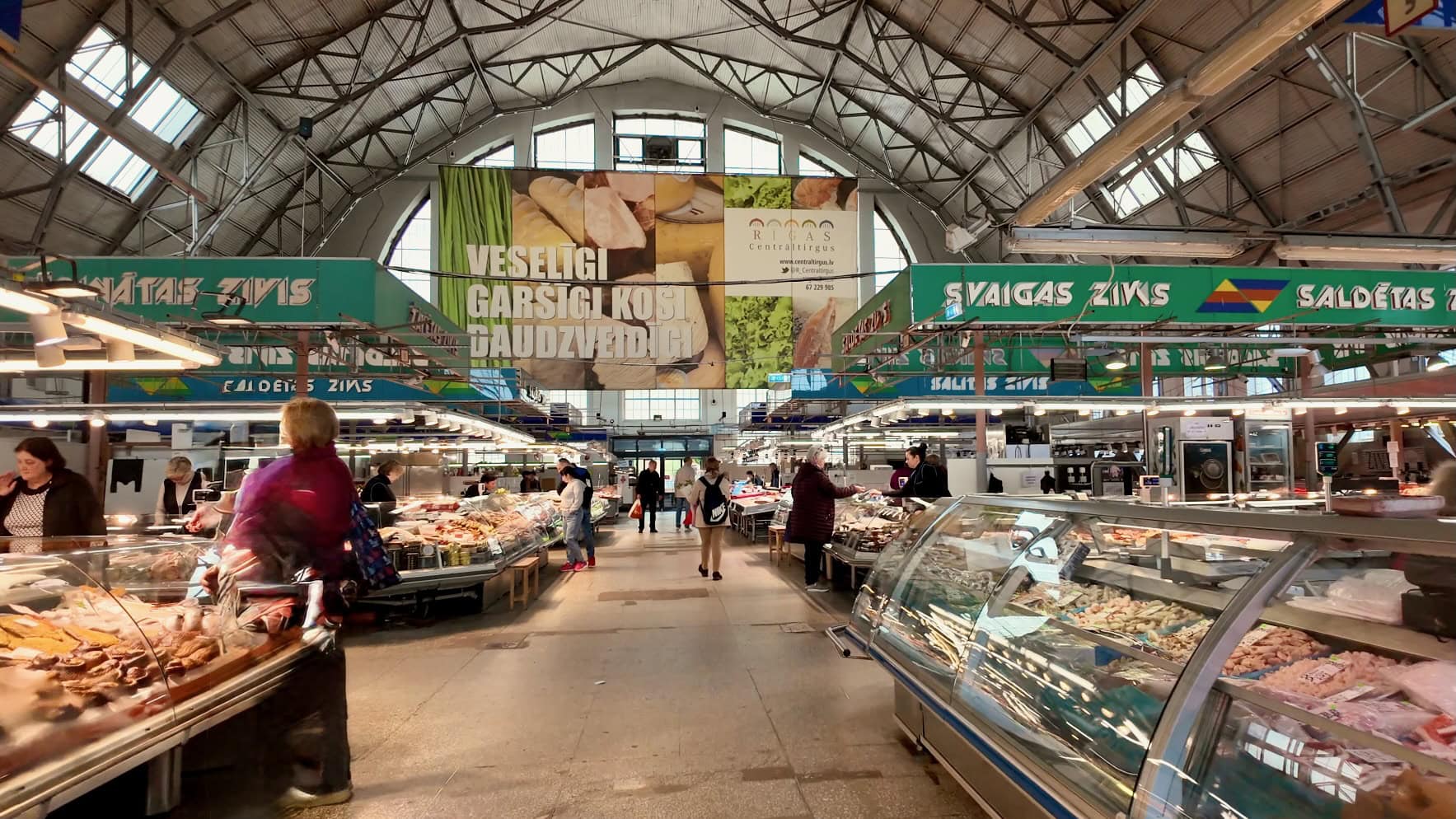
More substantial than it looks from the outside. The parks hold real everyday life, and the Central Market is the city at its most alive — a place you’d come back to just to walk through again.
The parks are essential, a café table gives you the city at its own pace, and the river promenade on the far bank is one of those places you don’t find until you cross a bridge you weren’t planning to cross.
On foot
A few places worth knowing
Not sights to tick off — a few suggestions for experiencing each side of Riga on foot. How it feels to walk, where the street life gathers, and where the city lets you stop. It’s how the video moves through the city.
Walk from the old town out into the art nouveau district — you move through the city’s layers and feel it change character as you go. Cross Stone Bridge to the National Library — out of the centre and over the river to a different side of the city. And get lost in Vecrīga itself — compact and textured, easy to get turned around in, just as easy to find your way back.
Vērmane Garden, where a lot of the city’s social life happens without much of an agenda. Around the Freedom Monument, where the movement belongs to the city as much as to its visitors. And the Central Market — an experience in itself, and not one to miss.
Bastējkalns Park along the canal — water, benches, a pace that belongs to the city’s own rhythm. A café table somewhere around Tērbatas iela, where you sit still and let Riga come to you. And the Daugava promenade on the western bank, between Vanšu and Stone Bridge, showing you a version of the city you don’t find from inside it.
This is how the video walks Riga — the full route is in the film.
Want a local’s stories along the way? A guided walk through Riga’s Art Nouveau district and parks →
What we recommend
Don’t miss these
You’ll come across plenty as you explore. These are the ones we recommend making time for.
The old town — Vecrīga
St Peter’s Church — Take the lift, not the stairs — this one spares you the climb St Olaf’s demands in Tallinn, and the view is arguably the better trade. From the observation deck, the old town lays itself out in full: the cathedral’s copper roof, the Daugava beyond it, the newer city pushing out past the river on the far side. The church itself dates back to the 13th century, though what you see today is largely a postwar rebuild — the original spire came down in the fighting of 1941 and wasn’t fully restored until decades later. Go in the late afternoon if you can; the light does something to the rooftops that the morning doesn’t.
House of the Blackheads — The ornate guildhall on Town Hall Square, rebuilt after the war — worth a look even if you don’t go inside.
Riga Cathedral — The great brick cathedral at the heart of the old town, its organ one of the largest in the world when it was built.
Squares & monuments
The Freedom Monument — This is the one place in Riga where you’ll consistently find locals rather than only visitors — Latvians still lay flowers here, and the changing of the guard draws a small, quiet crowd rather than a performance for tourists. Built in 1935 and funded almost entirely by public donation, it survived the Soviet occupation despite what it represents, largely because officials reinterpreted the figure at the top as a Soviet symbol rather than tear it down. It sits exactly on the seam between the old town and the boulevards, which makes it less a destination than a hinge — you’ll likely pass beneath it more than once without planning to.
The Three Brothers — The row of the oldest houses in the city, each from a different century, standing shoulder to shoulder.
Bastējkalns Park & the canal — The green ribbon winding around the old town’s edge, especially good by boat if you want a slower way to see it.
Art Nouveau & the market
Central Market — The pavilions were originally built in the 1920s to house German zeppelins, repurposed when the airship programme collapsed — which is why the ceilings soar the way they do, far higher than any market needs. Five hangars in total, each specialising: meat in one, fish in another, dairy, vegetables, a fifth for everything else. It’s one of the largest markets in Europe by size, and unlike the old town it hasn’t been smoothed over for visitors — the crowd here is doing its weekly shopping, not posing for photos. Go hungry. Go early if you want it quiet, midday if you want to see it at full volume.
The Art Nouveau district — Alberta iela and the surrounding streets of ornamented facades, best appreciated slowly, looking up.
The National Library — The “Castle of Light” across the river, with the view back at the old town worth the walk on its own.
St Peter’s tower, the House of the Blackheads and the museums are the ones that need a ticket. Everything else — the squares, the market, the streets — you’ll just walk into.
Short on time? Do two: St Peter’s for the view, the Central Market for the scale of it. Everything else you’ll probably stumble into anyway.
Where to stay
Three hotels, all worth the stay
Where you stay shapes how a city feels. For Riga we stayed in three hotels worth recommending — one on the edge of the old town, two within it — each a different version of the city.
Riga is one of three cities on the Baltic Capitals trip. See the whole route →
A closer look
The Central Market, at street level
The video at the top walks all of Riga. This one stays in a single place — the Central Market — without the analysis. Just the market, at street level.