Just passing through
Bratislava
Compact enough to cross in minutes — but it never settles into just one version of itself.
Bratislava is small enough that you could cross the centre without much of a plan. But it doesn’t stay one kind of city for long. A few streets can take you from the Old Town’s narrow lanes into wide, busy roads, or down to a waterfront that feels like it belongs to a different decade entirely. It’s a city that keeps shifting under your feet.
The lay of the land
How the City Changes
Three areas give a sense of how Bratislava shifts as you move through it — you recognise them not by name, but by how they feel. A starting point, not the whole map.
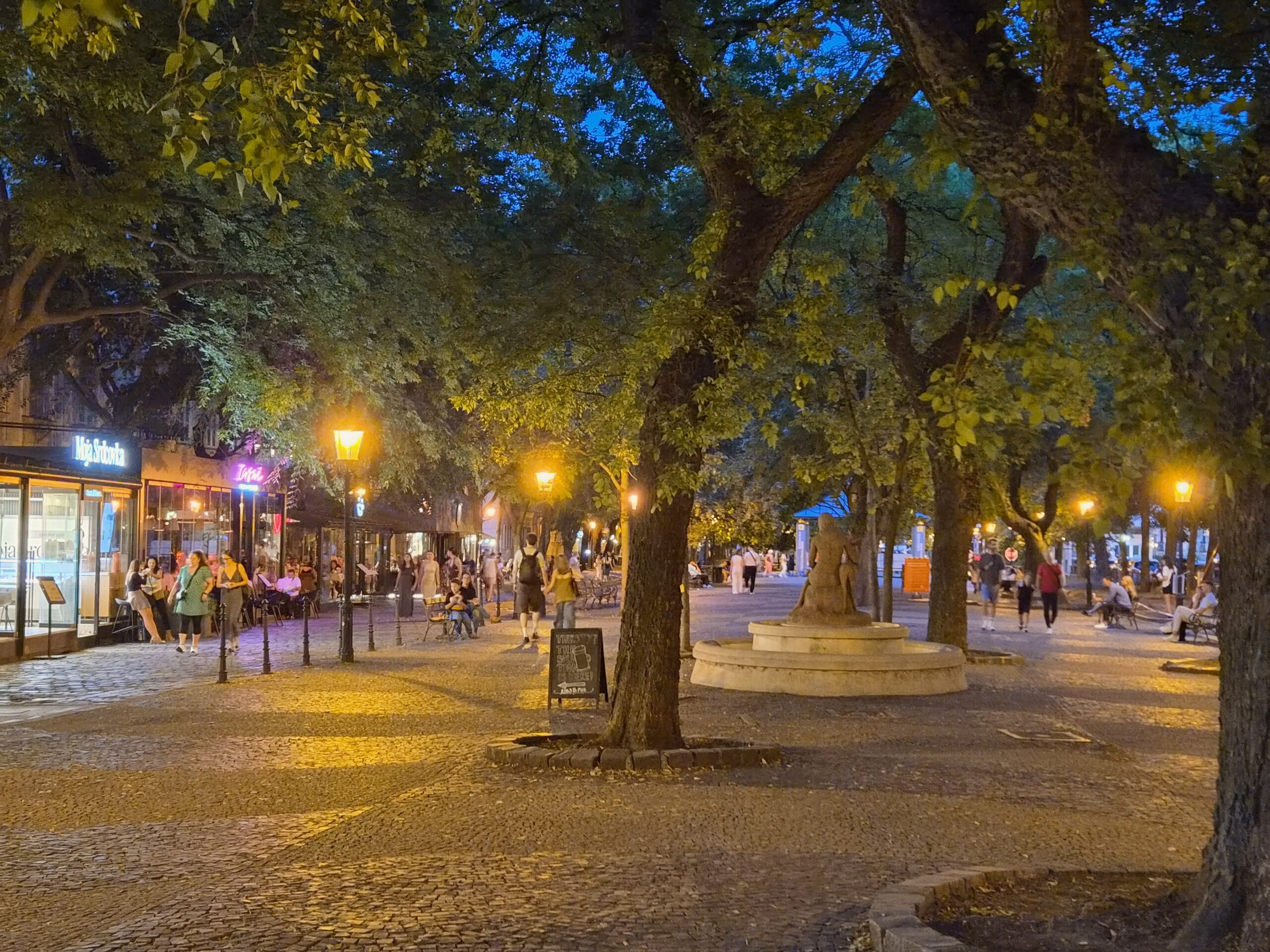
The Old Town — narrow pedestrian streets, small squares and older buildings packed closely together, with the castle hill rising just beside it.
North of the centre — around the Presidential Palace and the main station, the city turns broader and more everyday: wider streets, trams, traffic, and the ground slowly rising into quieter residential neighbourhoods.
The Danube waterfront — around Eurovea, the city opens up completely. Wider spaces, newer buildings, a different scale altogether.
How it feels to walk
Walking a City That Keeps Changing
The Old Town is the easiest part of Bratislava to walk. The blocks are short, side streets keep opening up, and there’s a clear pedestrian route through the middle — though it’s probably better if you don’t stick to it. Turn into a smaller street, follow it for a while, and because the centre is so compact, you’re never really lost. You just keep finding another street, another square, another way through.
What’s really interesting is what happens when you keep going. Walk north from the Old Town and the streets get wider, traffic becomes more present, and the city starts to feel very different — past the Presidential Palace, towards the main station, then uphill into quieter, more residential ground. Go the other way, towards the river, and you get another shift altogether: the ground flattens out, the walks grow longer, and the newer waterfront gives you far more space around you. You can move through several very different versions of Bratislava without actually walking very far.
The quieter pleasures
The Quiet Corners of a City in Motion
Bratislava gives you plenty of places to stop, and what works well is that most of them sit naturally along the walks you’re already making. Right in the centre, a long, tree-lined square gives you benches, shade and plenty of room to sit while the city keeps moving around you.
Further north, behind the Presidential Palace, the atmosphere changes completely. Once you’re inside the garden, most of the traffic and movement outside falls away, and it feels like a proper break from the streets around it. And down by the Danube, you get something more open again — plenty of places to sit along the water, without ever feeling like you’ve stepped away from the city. You don’t really have to search for somewhere to pause here. The places are different, but they tend to appear right along the routes you’re already walking.
The Travel Without Chaos Index
How Bratislava Scores
Three dimensions, each out of five — not a ranking, just an honest look at what the city feels like when you slow down.
High. The Old Town is compact and endlessly walkable, but that’s only one version of walking here — keep going and the city changes remarkably quickly, from wide roads to quiet residential streets to open waterfront, all within a fairly small area. Budapest and Munich land on the same score — worth comparing if you’re weighing similar cities.
Easiest to find around the centre, where the squares and pedestrian streets keep people close together. Further out it turns more ordinary — shops, trams, people simply moving through their day — and down by the river, the pace slows again. Vienna sits at the same level — worth a look if you’re comparing the two.
You don’t have to go far. A tree-lined square in the centre, a quiet garden behind the Presidential Palace, and open space along the Danube — three very different kinds of pause, all close together. Vienna, Salzburg, Trieste, Vilnius and Munich all score the same here — worth comparing if pausing well matters to your trip.
On foot
A few places worth knowing
Not sights to tick off — a few suggestions for experiencing each side of Bratislava on foot. How it feels to walk, where the street life gathers, and where the city lets you stop. It’s how the video moves through the city.
Get lost in the Old Town — the main pedestrian streets are easy enough to follow, but the centre is so compact it’s worth leaving them behind. Walk up to Slavín, starting around the Presidential Palace and continuing past the main station — a good climb for watching the city change around you. Or make a loop across the Danube: two bridges, both sides of the river, and several very different parts of Bratislava in one walk.
Main Square is the obvious place to start — right in the middle of the Old Town, with people crossing and meeting between the surrounding streets. Obchodná Street feels far more everyday, with shops, trams and a steady flow of people moving through the city. And down at Eurovea, the riverfront creates a different kind of activity — people walking, sitting outside, spending time along the water.
Hviezdoslav Square, between the Old Town and the river — trees, shade and plenty of benches through the middle. The Presidential Garden, behind the Presidential Palace — quieter and greener, surprisingly removed from the busier streets just outside. And Eurovea again, this time for the water — plenty of places to sit right beside the Danube.
This is how the video walks Bratislava — the full route is in the film.
What we recommend
Don’t miss these
You’ll come across plenty as you explore. These are the ones we recommend making time for.
The Old Town
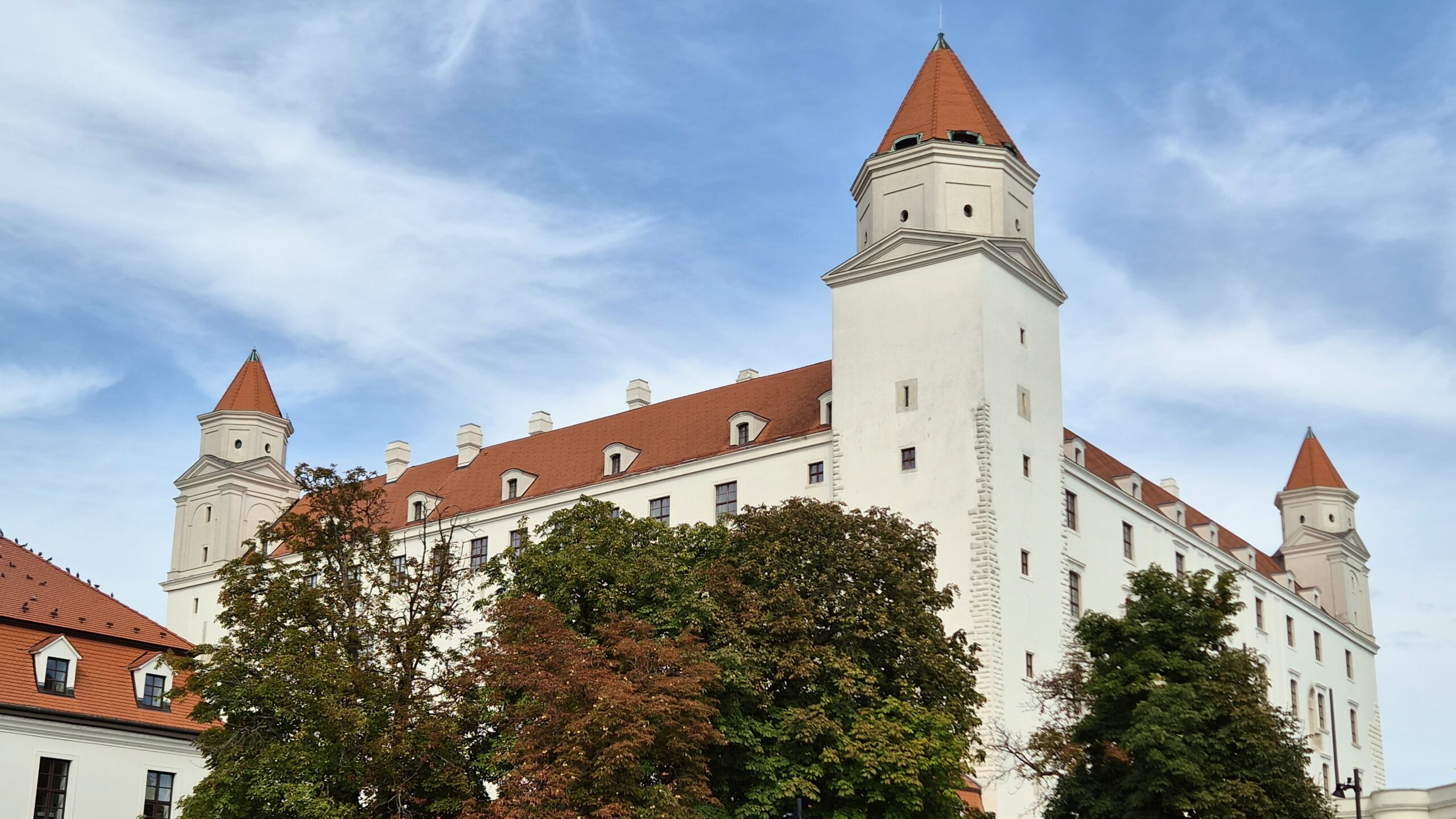
Bratislava Castle — the white, boxy fortress on the hill above the Old Town, rebuilt after a fire in the 1950s and restored again since. It’s been a Slavic fort, a Habsburg residence and a barracks over the centuries, and today the courtyard and ramparts give one of the widest views over the city and the river bend below. It sits close enough to the centre to fold into a walk, but the climb is real — plan for it rather than treating it as a quick add-on.
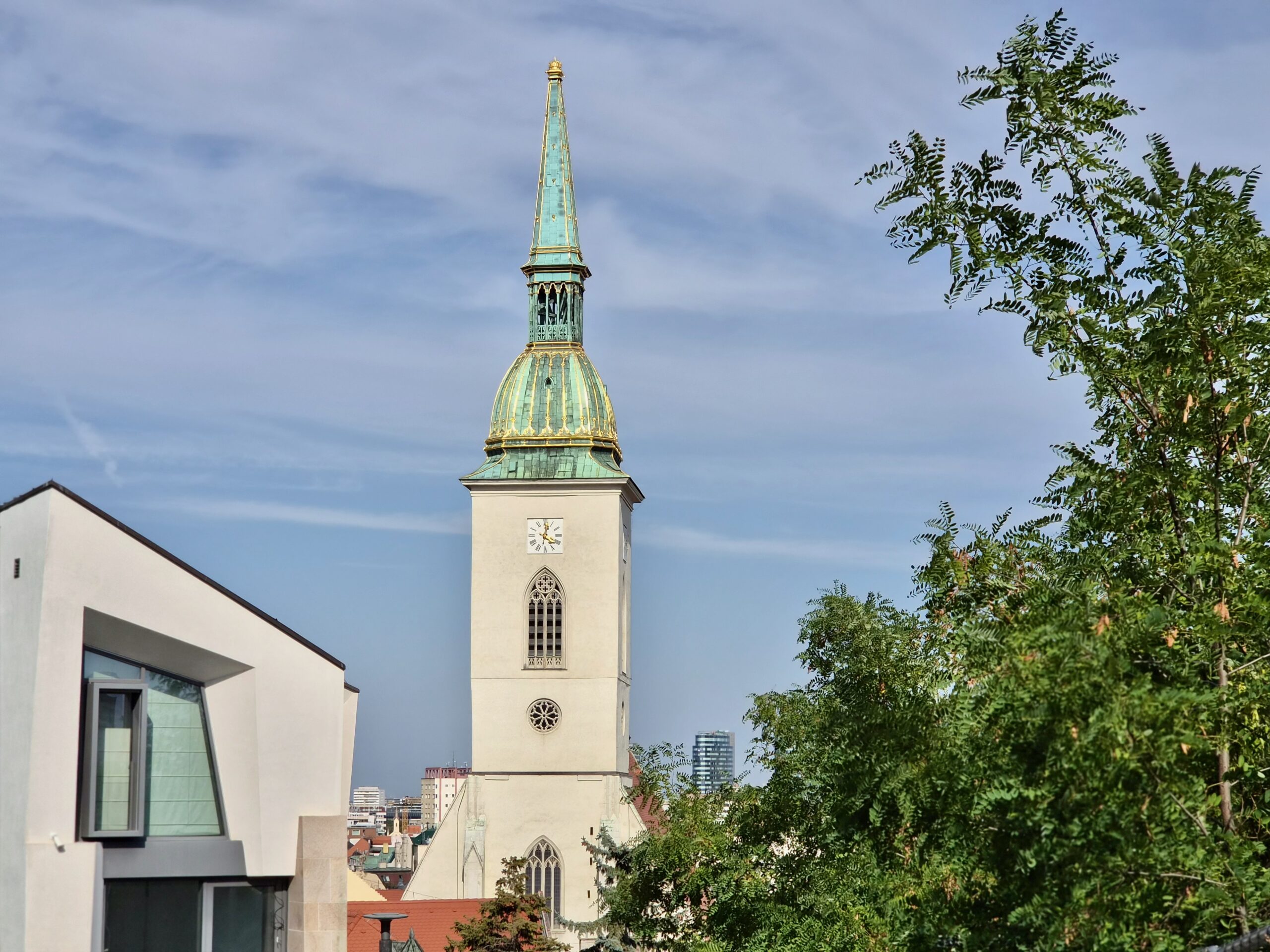
St. Martin’s Cathedral — the Gothic coronation church where Habsburg monarchs were crowned kings and queens of Hungary for nearly three centuries. A gilded replica of the Hungarian crown still sits on the spire, a reminder of that history long after the ceremonies moved elsewhere.
Michael’s Gate — the last surviving gate of the medieval city walls, and the main way into the Old Town from the north. Climb the tower for a close-up look at the rooftops, or just use it the way locals do: as the doorway into the pedestrian streets beyond.
North of the centre
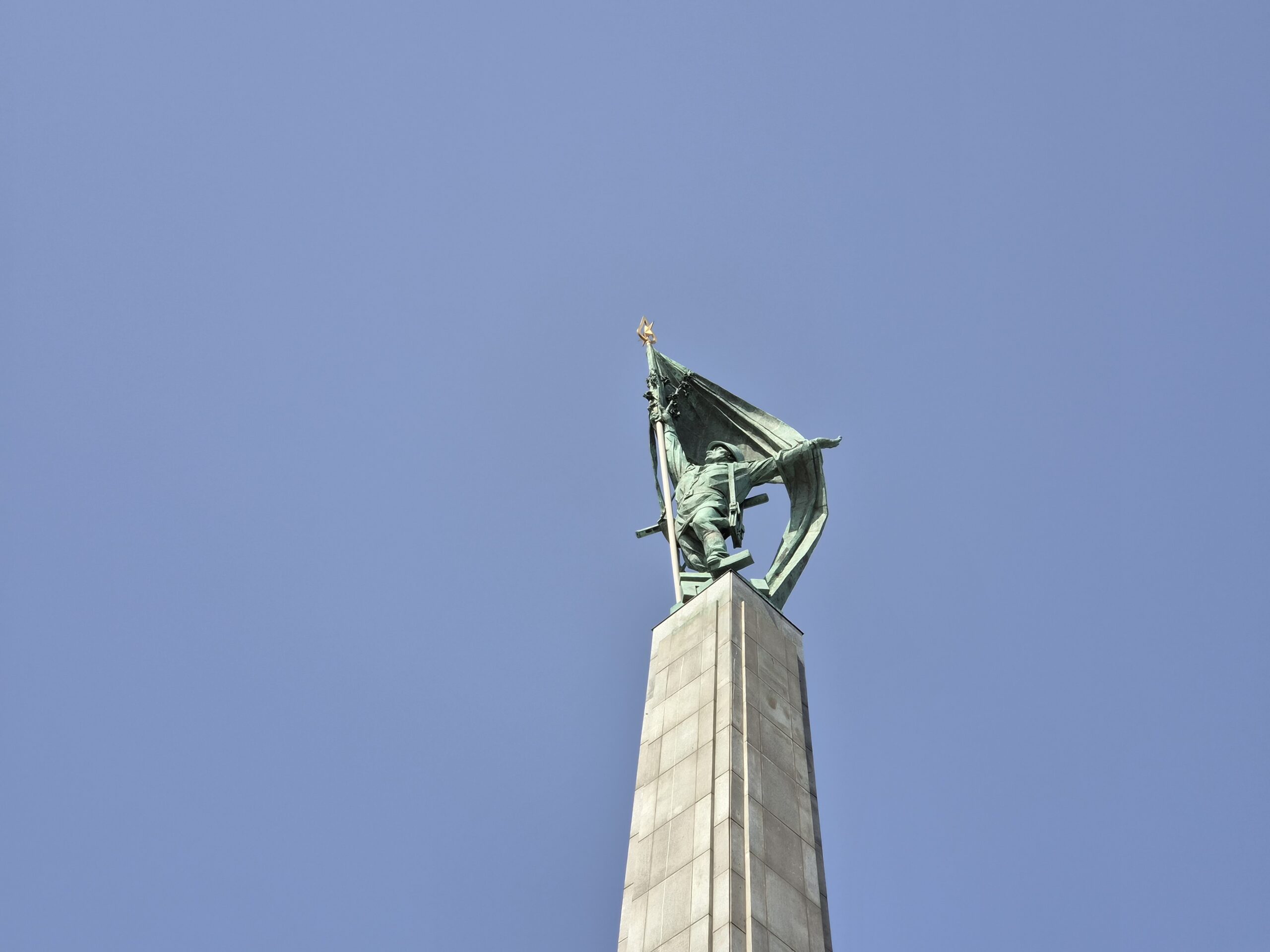
Slavín — a war memorial and cemetery on a hill north of the centre, built for the Soviet soldiers who died taking the city in 1945. The climb up from the Presidential Palace runs straight through the shift the walkability section describes — busy centre, then quieter residential streets, then this: a wide terrace, a tall obelisk, and one of the best views in the city.
Grassalkovich Palace — the Slovak president’s official residence, an 18th-century rococo palace behind iron gates. You can’t go inside, but the garden behind it is open to the public and is one of the calmest few minutes this close to the centre.
The Danube waterfront
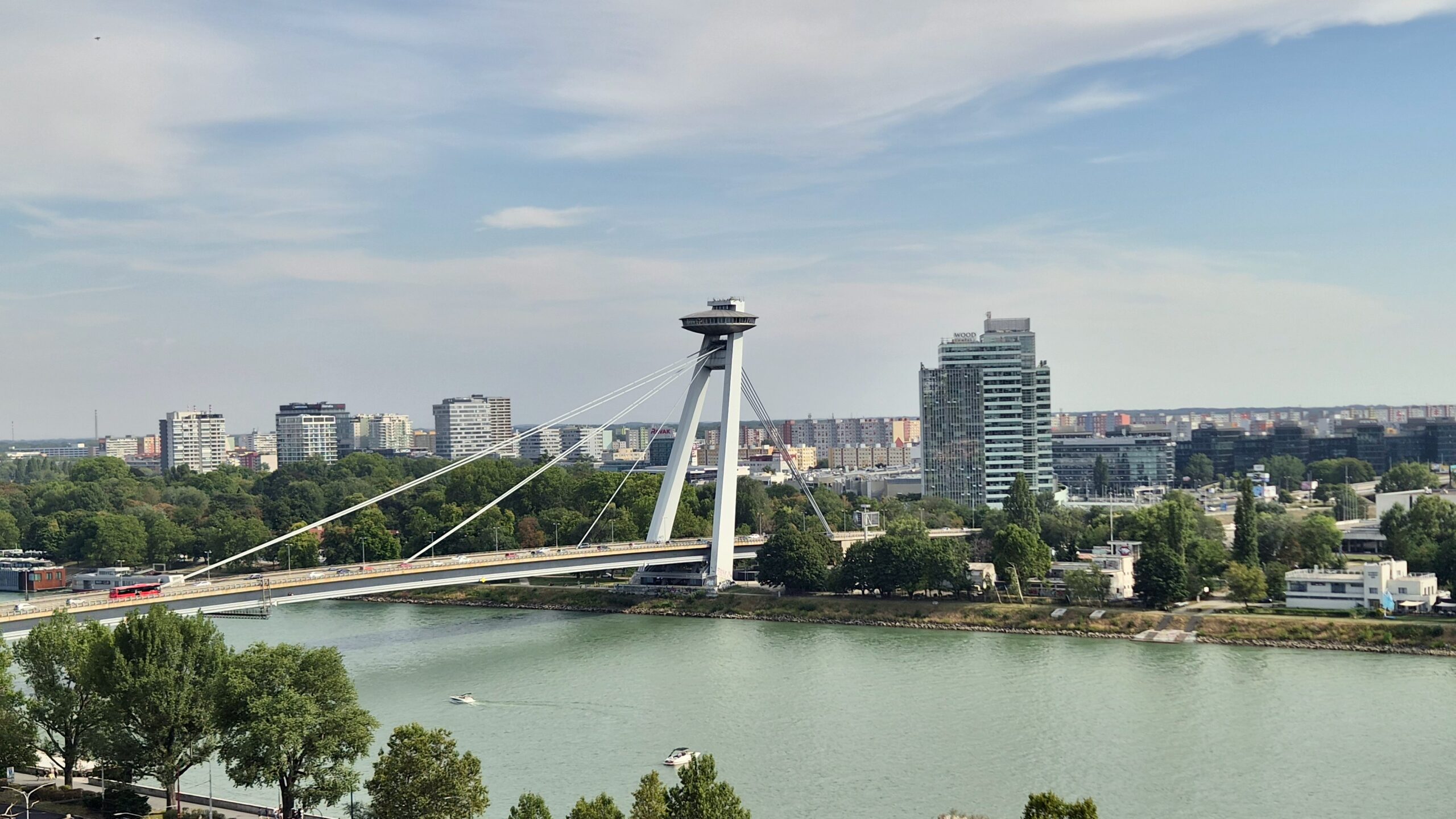
The UFO Observation Deck — the saucer-shaped structure perched above the SNP Bridge, built in the 1970s and looking every bit like it. The deck gives a flat, wide view straight down the Danube and back across the Old Town’s rooftops — a strange, very Bratislava way to see the whole shift the city makes, in one frame.
Eurovea — the newer riverside development east of the Old Town, glass and open plazas where the older city gives way to something built in the last twenty years. It’s less a single sight than a change of scale — worth walking through just to feel the contrast.
The Castle, St. Martin’s and the UFO deck need a ticket. Everything else — the gate, the garden, Slavín, Eurovea — you’ll just walk into.
Short on time? Do two: the Castle for the history and the view, Slavín for the climb and the strangest silence in the city.
Where to stay
Three Hotels, All Worth the Stay
Where you stay shapes how a city feels. For Bratislava we stayed in three hotels, each giving a different read on the city. Same centre, three different versions of it.
Bratislava is one of three cities on the Three Capitals on the Danube trip, alongside Vienna and Budapest — the full route is coming soon.